Mendi 1951-1953
‘We are thankful for the strong missionary instincts of the Younger Churches and for the gift of these young workers from the Solomons, Papua and New Guinea.’
Missionary Review 1953
Setepano Nabwakulea was one of the first men from Papuan Islands District to go to work with the new mission in Mendi. He had been educated in English in the Methodist mission school on Misima Island in Milne Bay and was a teacher. Setepano was able to write his own story in letters that were published in Australia in Missionary Review and elsewhere. Other writers mentioned him, as he was an important leader. Setepano, and later with his very capable wife Kiloi, served in Mendi from 1951 until 1963.
In his first letter, written on 12 April 1951, Setepano wrote:
“I am going to write a few lines to tell you of our coming to this new Methodist Mission Station and something about these people. Timoti and I left Port Moresby on 14 February by ‘plane and we arrived at Mount Hagen on 16 February. We unloaded our goods from the ‘plane and walked to the Lutheran Mission Station at Ogelbeng and stayed there for three weeks. Then I went first in a small ‘plane to our new Mission Station called Mandi. Then after three days my friend Timoti arrived. We were both happy to see the Rev. G. H. Young and four native teachers from Rabaul. We thank God for looking after us on our journey to this Station where He has called us to do His work.”
Setepano Nabwakulea, Letter written on 12 April 1951
First school in Mendi
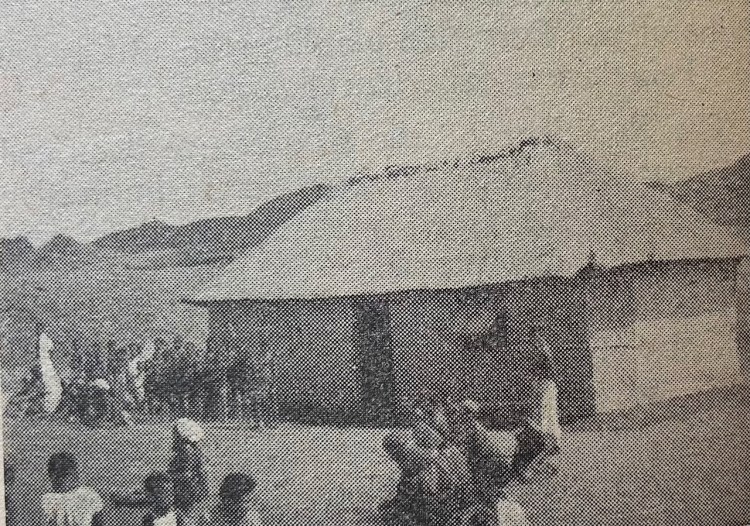
Setepano had the honour of starting the first school in Mendi, and in the whole Southern Highlands. He told this story in a letter which was published in a small magazine for children, Friends, in 1954.
“I hope that you will like to hear about our school here at Mendi. On Tuesday, third of September 1951, we began our school, the first in Mendi, when 23 children started school. The Reverend Gordon Young took photos of the children and myself.
Setepano Nabwakulea, Story published in a small magazine for children, Friends, in 1954.
On 28 October 1951, Mr. and Mrs. Barnes, Sister Joyce Walker, and Miss Elsie Wilson arrived. We were happy when we met them, and we ask God to lead us every day so that we can help his people. Miss Wilson prepares all the materials for school. Daniel Amen and I help her in school to look after the boys and girls every day. We think about Home, at Misima, where many, many children, boys and girls, know how to read and write.
The Mendi children have been very slow in learning their lessons the last two years. This year is a little bit different; some boys and girls have started to write, and to read themselves because of the power of God. We know that God is always with us, and believe that the power of Jesus will enable us to teach the many people, men, women, and children. Then afterwards they will know how to write, and how to read, and they will learn more and more about Jesus, and know that Jesus is our Savior and Savior of all mankind.”
Preaching places
As well as teaching in the mission school, Setepano Nabwakulea was a lay preacher and every Sunday went to preach at one of the preaching places. At first, they were not allowed to travel very far from Unja. In 1952, the new agriculturalist missionary David Johnston wrote about the work of preaching.
“As I sit this Sunday morning, scanning the range with its sparse covering of timber and the undulating hills of kunai grass, with the morning shadows, giving the gullies an even deeper appearance, I wonder who at home is upholding us in prayer. On the track to Tend is the Reverend Gordon Young striding along with a number of local natives and some boys from the Administration station. Just ahead of him is Setepano Nabwakulea, one of our teachers. They are going to take services at two places in the northern end of the valley from the mission station. “
David Johnston, 1952

First church building in Mendi
When the first church building in Mendi was built and ready to be opened, Setepano was invited to lead the first church service in that new building. Gordon Young wrote that story for the newspaper in his home town.
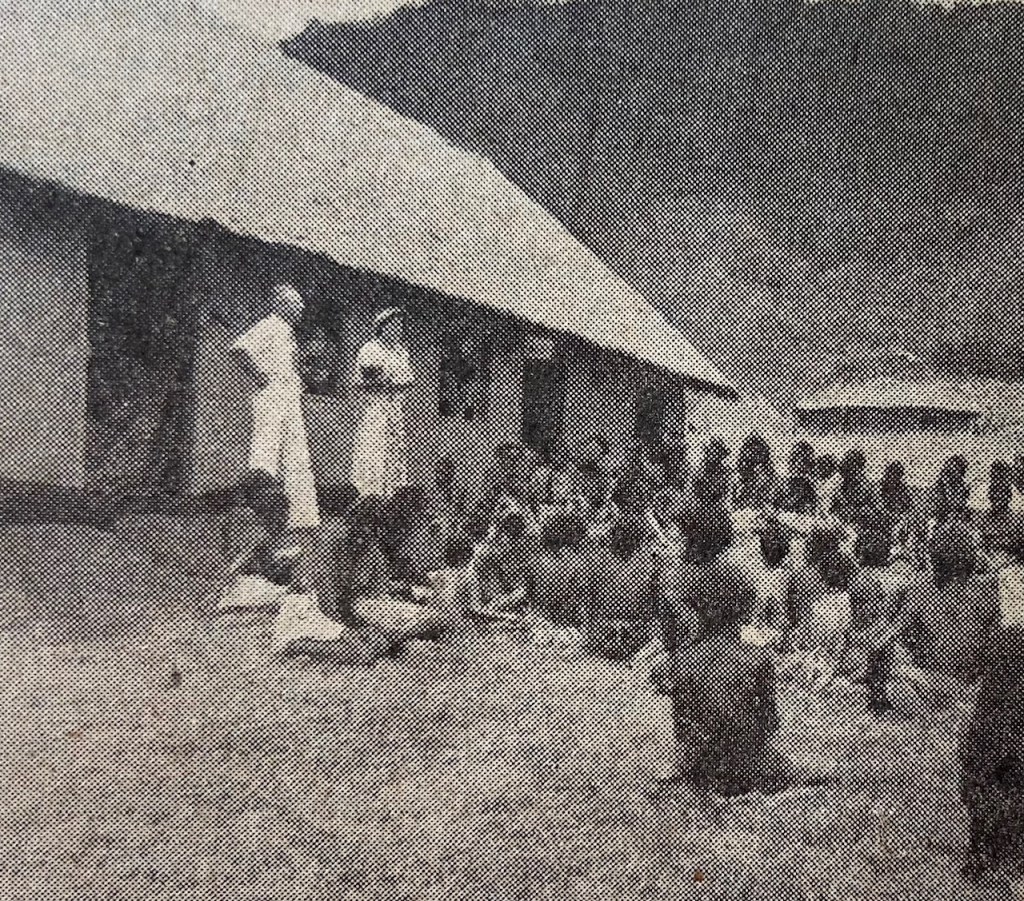
“Our church was officially opened on Sunday, 27 September 1953. By 11 o’clock 200 native people had assembled outside the church, waiting, and wondering what it was all about.
Gordon Young. 1953
After the singing of a hymn and prayer by Kaminiel Ladi, Dr E. Brotchie of New South Wales, who was visiting us, kindly opened the church. His well-chosen words were translated into the Mendi language by Miss Elsie Wilson. At the conclusion of the opening ceremony, we all entered the church for service, which was conducted by Setepano Nabwakulea from Papua.“

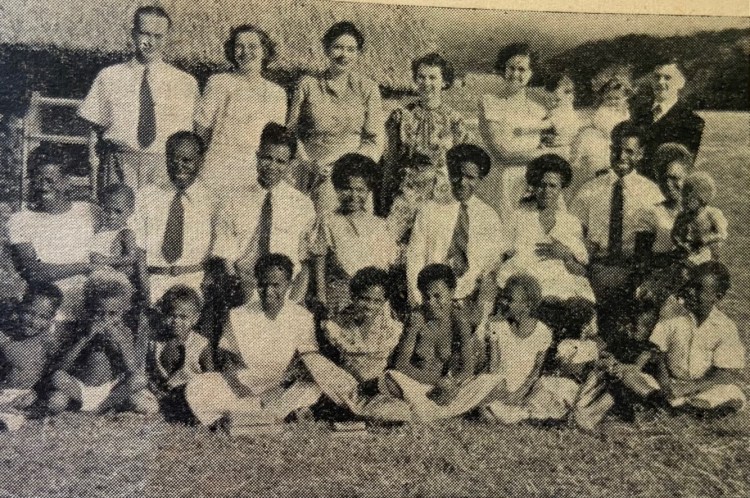
Setepano Nabwakulea and his wife Kiloi were just one couple among many men and women from the islands of New Guinea and Papua who served in the Highlands for many years. In 1953, two couples from the Methodist church in the Solomon Islands arrived in the Highlands. This was a new partnership linking the mission work of Methodists in Australia and New Zealand. The Solomon Island men, Alpheus Alekera with wife Eileen and three children, and John Pirah with his wife Ruth and child, were appointed to the new pioneer work in Tari. They also served in the Highlands for many years. As pioneers and Christian workers who served God in difficult and challenging places, they should all be honoured and respected. An observer wrote, ‘We are thankful for the strong missionary instincts of the Younger Churches and for the gift of these young workers from the Solomons, Papua and New Guinea.’
Margaret Reeson
1951-53; Mendi
Sources:
Setepano Nabwakulea, The Missionary Review—May, 1951—Page 15
Setepano Nabwakulea, Friends Magazine March 1954
David Johnston, article in The Methodist, 20 December 1952
Gordon Young, Pinnaroo and Border Times (South Australia) 17 December 1953
Missionary Review, June 1953
 Margaret Reeson