This slide show presents pictures from 1961 to 1963 of Bible Schools and Evangelists working in the Southern Highlands of PNG between 1961 and 1963 – an extraordinary period of growth.
Click on the arrows on each side of the pictures to go forward and back.
Why did a new Methodist mission start in Tari in 1953?
In some ways this is surprising. In 1953, the mission work in Mendi was still very new. The mission group had only been there for two years. They were a very small team, with two ministers, one agriculturalist, one teacher, one nurse and six island pastor-teachers and their families. For most of the two years, only one of the ministers was there at the same time, while the other one was on leave. They were only allowed to travel a short way from Unjamap. Not many local people trusted the nurse at the little hospital. Children came to school sometimes but not every day. Mendi people thought that the agriculturalist didn’t understand the right way to make a garden. One of the missionaries wrote, ‘We know so little of the language’. There was still no sign of any response to their Christian message.
So why did they attempt to start another new mission in the Tari area at that time? They were not even sure how far away Tari was from Mendi; Young thought it was about 40 miles to the west and Barnes thought it was about 60 miles, or 97 kilometres, but they didn’t know. There was no road between the two places, only mountains, and the only way to get there was when an airstrip was built. The people of Tari spoke a different language from Mendi, and had many different beliefs and customs from the Mendi people. Another new mission would have to start at the beginning.
But in spite of the difficulties, they had a vision and believed that God was calling them. At the General Conference of the Methodist Church in Australia in 1945, they agreed that:
‘there is a call to the church to advance into areas that are still unevangelized and warmly approves the action taken by the Board of Mission to occupy a new area of mainland New Guinea’.
In 1953, the Board of Mission was happy to agree when Gordon Young asked for permission to start a new work in Tari. They wrote ‘In 1950 we answered that Call [to start in Mendi] … We were true to the traditions of Methodism. We went not only to those who needed us but to those who needed us most.’ In the church newspapers, the Board of Mission encouraged Australian Methodists to support this new work with prayer and people and money. They appealed for 15,000 pounds, which was a lot of money at that time, about the same as $587,600.00 AUD in 2023.
Gordon Young was very interested in moving to new areas as soon as possible. When he wrote about Mendi and the new work in Tari in his annual report in 1953, he said:
It is unlikely that our work will remain limited to these two places, and the opening of new stations in the area must be envisaged. What we can do in the Highlands depends largely on the response of our people in Australia. The “Highland Challenge” must be presented to our home Churches as a call of God for sacrifice in terms of money and service.
Gordon Young, Annual Report, 1953
A year later, Roland Barnes was also thinking about new work in the future. He wrote:
We have a great deal of work ahead of us just around Tari but we are looking beyond. To the west of us are areas as yet untouched and some of these are not yet explored. We have plans for an aerial survey so that we can look at some of these areas and thus have a better idea of the task of evangelisation ahead of us.
Roland Barnes, 1954
There was another reason why the Methodists wanted to move quickly. They knew that they were not the only missionary organisation who were interested in these new regions. When Gordon Young first visited the Highlands with the survey team in 1950, he saw that some large districts like Chimbu, Eastern Highlands and Western Highlands, already had one main mission group who saw that area as their responsibility; a Lutheran area, an Anglican area, a Baptist area, a London Missionary Society area. The Catholic Church went everywhere, but some of the other churches decided to have an understanding with each other and not start new work in places where other churches were already working. Perhaps Gordon Young thought that the Southern Highlands, where he was the first Missionary, ought to be a Methodist area. But if it was to be a ‘Methodist area’, the Methodist workers would have to arrive first, before other groups.
In the very small group of Australians living in the Mendi Valley in 1952 were three couples and two single women living at the Methodist mission at Unjamap. On the other side of the Mendi River at their patrol post at Murumb were three or four young Australian patrol officers, the kiaps. The young single men often appreciated the hospitality of Gordon and Grace Young and they met every time Young or one of the others went to the airstrip to collect goods or mail. Through this contact, Young learned about the new airstrip being built in the Tari Basin. It would soon be ready for a plane to land. He arranged to travel to Tari as soon as a plane was available and landed there on 7 January 1953. Catechist Tomas Tomar and teacher Inosi Kwabaiona went with him. The very next day, on 8 January 1953, a senior missionary Len Twyman from the Unevangelised Fields Mission also landed in Tari. To the Huli people of Tari, both groups of new arrivals were a great mystery.
In the first week in Tari, Gordon Young, Tomas and Inosi camped near the airstrip and went searching for a place to start their new mission. With the support of the patrol officers, they negotiated with the local people and selected a place at Hoiebia, about 2 km from the airstrip on 15 January 1953. This land was close to a river and had some level ground. The local people had seen white men before; patrol officers Taylor and Black camped at Hoiebia in 1938 and Smith, Clancy and Neville camped there in 1951. Young, Tomas and Inosi started to clear some ground and camped there for the first time on 24 January.
On January 26th, 1953, the Rev. Roland Barnes arrived in Tari after his furlough, ready to be the first Superintendent minister there. Gordon Young stayed in Tari for the first eight weeks and then returned to Mendi.
It was time to start a new work.
Margaret Reeson 2023
Sources: Gordon Young, Missionary Review September 1953 p.15 Roland Barnes Missionary Review July 1954 p.13 Gordon Young, ‘Papua-New Guinea Highlands Expansion and Development 1953’ in The Open Door: the Missionary Organ of the Methodist Church of New Zealand June 1954 John and Moyra Prince, A Church is Born: a history of the Evangelical Church of Papua New Guinea, 1991, p.69
The people at the new Mission in Mendi were very excited when the first church building was opened. Gordon Young wanted to build a church as soon as he arrived in Mendi, but they had to wait until they had houses to shelter their workers. The new building was opened on 27 September 1953 and even had a bell to call the people.
The story about the opening of the new building at Unjamap was told in a newspaper in South Australia, in a town where the people knew Gordon and Grace Young.
At the time when the church was opened, they had a visitor. At that time, not many people visited the Highlands because it was still ‘restricted territory’. This visitor was Dr E.B.H.Brotchie, who was a medical practitioner in Sydney. He was very interested in the new mission and was a new member of the Methodist Overseas Missions Board. He visited Mendi in 1953 and was there when the first church building in Mendi was dedicated. Gordon Young invited Dr Brotchie to open the new building. Dr Brotchie wrote his own story of his visit.
Dr Brotchie at opening of first church in Mendi, with Miss Elsie Wilson
Grace Young wrote the story of the church opening:
“Mendi church is now open. It was a cold grey morning, not at all inviting weather for the Mendi people to venture forth. Still, our church was officially opened on Sunday, 27 September 1953. By 11 o’clock 200 native people had assembled outside the church, waiting, and wondering what it was all about.
After the singing of a hymn and prayer by Kaminiel Ladi, Dr E. Brotchie of New South Wales, who was visiting us, kindly opened the church. His well-chosen words were translated into the Mendi language by Miss Elsie Wilson. At the conclusion of the opening ceremony, we all entered the church for service, which was conducted by Setepano Nabwakulea from Papua.
Not only was it the opening of our church, but also our Thanksgiving day, the one-day of the year, when the native people give their offering for the work of God. There was special singing by the native staff, their wives and families before the offering was made.
The school children living on the mission station were very proud of their offerings, as they had earned them themselves. At Sunday school, the previous Sunday, they were told the story of the talents and given one penny. Instead of doubling it, they decided to increase it six times which most of them manage to do. Sunday school was held at the end of the service. Some of the Mendi children had brought a sweet potato each which they gave as their offering.
We are proud of our church, although it is not yet really completed, it was quite a picture that day with its floral display. Vases of flowers were on the ledge of all 10 window openings, and the communion table.
Rather an amusing incident took place during the service. All was quiet when suddenly there was a loud yell. One Mendi man received an unexpected backwash when a vase of flowers blew over on his back. Just imagine having your first wash for years, you would yell too. … With the singer we say, Bless this house. Oh, Lord, we pray may it truly be a house of God wherein all may come to know and worship him who is above all others. ”
First church building in Mendi, opened at Unjamap in 1953
Dr Brotchie wrote his impressions of Mendi:
“A visit of three weeks to Mendi Methodist Mission in the Southern Highlands District of Papua is not enough to obtain a full idea of the extent and amount of work done in this developing area. The Mission is led by the energetic Rev. Gordon Young, assisted by a small band of helpers. Progress is obvious in the greater amiability of the local tribes formerly at constant warfare, in the five preaching places besides Hunja (the Mission Station) with attendances of up to six hundred people, in the eagerness of the Native preachers to extend the work further afield, and in the building of a new Church complete with bell and belfry.
The absence of the poisoned bow and arrow and the bone-pointed spear and the presence of working tools such as knives, tomahawks and spades, means that progress is being made. Although the language is one of the most difficult in New Guinea, a conversation can be maintained and understood, and the ready smile, the welcoming hand and ‘Hunja Kundi A-v-ah!’ [The leader at Unja] means that Rev. Gordon Young is at home with them and they with him.
The new Church was opened in the presence of two hundred people. It was planned two years ago and work commenced three months ago. It is a credit to all those employed, including the four Native Teachers whose obvious enthusiasm, as they each took part in services on the opening day, indicates the spirit in which the building was carried out.
Aerial view of Mendi in 1954. Methodist mission property centre left. Mendi River in centre. Agricultural lease on right of river. Road leading north from Murumb township. Mangani River on far left. At that time, there are few signs of gardens or hamlets in that part of the valley as it was traditional ‘fighting land’.
The Mission has a hundred acres, leasehold, on both sides of the Mendi River. It grows bananas, pineapples, sugar cane, passion fruit, soya bean, sweet potato, taro, and other vegetables. Natives are learning the principles of soil conservation under Mr. David Johnston, H.D.A. Their lives are being enriched both physically and spiritually. Adult and child education, under Miss Elsie Wilson, with wall charts, primers and reading books is gradually revealing the possibilities within the native mind. With children speaking six different languages, the work is not easy but a happy association between teacher and student is being maintained.
The medical services at the Mission are in the hands of Sister Joyce Walker and Sister Beth Priest. They are not afraid to tackle any problem that comes their way. Confinement difficulties, feeding troubles, pneumonia, infections, yaws, leprosy, burns, all provide opportunities to express the healing love of the Master.
The Superintendent, Rev. Gordon Young, is vitally interested in all the activities being carried on at Mendi. He has visions of extending the work still further through the Southern Highlands and hopes to have five centres within twelve months including that already opened at Tari, where the Rev. Roland Barnes is in charge. Working from early morning till late at night, he keeps a watchful eye on every aspect of the work. When the mastery of a new language is complete and other initial difficulties are overcome, the fruit will be seen which will justify the foundations being so truly laid at the present time.”
Margaret Reeson, 2023
Sources: 1953 From Pinnaroo and Border Times (South Australia) 17 December 1953 Dr E.B.H. Brotchie, The Missionary Review, November, 1 9 5 3 — P a g e 1 5
Roland Barnes was very keen to start his new work in Tari. He and his wife Miriam were on furlough in their home State of Queensland at the end of 1952 when they found out that he was to start a new mission in Tari. The government officers said that Mrs Miriam Barnes was not allowed to go Tari until they gave her permission, so she stayed in Queensland with her two little children to wait.
When Roland Barnes landed in Tari on 26 January 1953, Gordon Young was already there, camping at Hoiebia. As Young had predicted, the Methodists were not the only ones who had been thinking about new mission work in the great Tari Basin. Thousands of people lived there who had never heard the gospel of Jesus. The day after Gordon Young arrived in Tari, men from the non-denominational Christian missionary society, the Unevangelised Fields Mission (UFM), came to Tari as well. This mission had been working in Western Province of Papua since the 1930s and had mission teams in many places almost to the border with Irian Jaya. They started a UFM mission work at Lake Kutubu in the Southern Highlands in 1950. Like the Methodist group, they believed that God was calling them to move into the new regions of the Southern Highlands. The UFM men, Jim Erkilla and Max Garlick, met with the Methodists Young and Barnes. Both groups had many things in common. They agreed, that in a region with such a large population of people who had not heard the Christian message, there was room for both of their missions. The Methodists had a lease about 2 km away on one side of the airstrip. The UFM men arranged with the local people and the patrol officers for a lease on the other side of the airstrip at a place called Walidegemabu; this area had been a fighting ground where very few people lived. Later, the Catholic Mission and the Seventh Day Adventist (SDA) Mission came to Tari as well.
Questions raised about new work
Not everyone was happy about this new Methodist outreach. Early in February 1953, when Gordon Young and Roland Barnes were camping at Hoiebia and working with Tomas and Inosi to prepare timber and woven pitpit blind for the first simple buildings, about fifty men were meeting in Sydney. They came from all over Australia for the Annual General Meeting of the Board of Methodist Overseas Missions (MOM). These men listened to reports from all the Methodist mission areas. There was news from Tonga and Fiji, India and North Australia, Samoa, New Guinea and Papua. The new work in the Highlands was only one part of their responsibility.
Some men started to ask practical questions. ‘Why have they started another new work at Tari when the work in Mendi is still so new? Is Gordon Young moving too fast? Who will pay for this? How can we find enough workers to send? We have so many needs in other places – is this the right time to be expanding our work?’
The General Secretary Cecil Gribble argued that God often called people to new ministries, even in difficult times. He said that workers from the Solomon Islands had already offered to come to help in the Highlands, and would support their own people there. In the end, the MOM Board decided that there should be no more new places opened in the Highlands for now, until the new work was better established, and they would try to work out plans for the future. They published this in the missionary magazine.
It was resolved: That for the time being our policy of development be one of consolidation before further mission areas be opened and that the monthly meetings of the Board explore the whole subject of development in the light of changing conditions.
1953 Annual General Meeting of the Board of Methodist Overseas Missions (MOM).
Australian and New Zealand co-operation
At the same big Board meeting in Sydney, there was another important subject. One of their visitors was the General Secretary of the New Zealand Methodist Church. He asked the Australians, ‘How can we find ways to work together?’ Both the New Zealand and the Australian Methodists wanted to be independent but decided that perhaps they could share some workers and some funding. The Board decided:
That the New Zealand church is invited to cooperate with the Australian Church in the work of a particular area.
1953 Annual General Meeting of the Board of Methodist Overseas Missions (MOM).
It was only an invitation, so far, and it was not clear what ‘particular area’ would be chosen. But some of those at the meeting hoped that the New Zealand Methodists would accept the invitation and that they would choose the Highlands area. If that happened, it would help with more staff and more money for the work.
The first months of work in Tari were very busy. The little team started to prepare simple buildings and set up a pit-saw to provide timber. The new airstrip was not ready for larger planes but one day a DC3 flew from Madang to Tari with a load for the government officers and the new missions. The load, of axe heads, spades, rice, salt, sugar, flour, mattresses, blankets, nails and cowrie shell — most valuable for trade barter — was dropped. The aircraft flew up and down above the airstrip and a team of men pushed out the cargo over the dropping point. Roland Barnes was very happy when they only lost some rice and salt because a few bags burst open when they hit the ground.
Rev Roland Barnes with Mrs Miriam Barnes and family, Tari 1957
Everything was new. The language of the Huli people of Tari was different from the language in Mendi and no one had ever recorded it. They started a little school in March 1953, and when Mrs Miriam Barnes was allowed to come to Tari in May 1953, with her two little children, she offered practical nursing as needed from her former professional work as a nurse. Miriam Barnes was the first white woman to live in Tari. Quite soon, Barnes started to work on a church building for Hoiebia. For the first year the patrol officers told them that they must not go any further from the airstrip in Tari than about 2 km, but many local people came to see them at Hoiebia. By the middle of 1953 they had already built a house for the Barnes family, two teacher’s houses, some buildings for a future hospital and were building a church.
The Australian Methodists in the Southern Highlands were feeling very hopeful. Their fellow-Methodists in New Zealand decided to work with the Australians in the Highlands. In 1953, in New Zealand the Methodist Conference decided ‘that the Conference accepts the invitation of the Methodist Church in Australia to cooperate in the Papua-New Guinea Highlands Mission’. This was very good news. Soon New Zealand ministers, nurses, teachers and builders would come to share their work. The MOM Board sent a message of appreciation. They said:
We convey our appreciation and with this will come our prayers that the response both in service and in giving will be such as to make possible a fruitful work of cooperation between the two churches in our newest Methodist field in the Pacific.
Australian Methodist Overseas Mission Board to New Zealand Methodist Conference, 1953
Solomon Islands Missionaries
The New Zealanders were not the only ones. In May 1952, in the Solomon Islands, the Methodists there celebrated the 50th anniversary of the beginning of Christian mission. At their Jubilee celebrations, they told the story of the coming of the first missionaries to the Solomon Islands in 1902. When they heard these stories, some Solomon Island Christians asked, ‘There is a new Methodist mission just starting in the Southern Highlands of New Guinea. Those people are the same as we were fifty years ago. Will some of our people go to them?’
Among the people listening to this story in the Solomon Islands was a local teacher, John Pirah from Bougainville and Alpheus Alekera from the British Solomons. Later, John Pirah wrote:
My heart was warmed at that time about the work in the Highlands and a little later I gave in my name as one who would go. I remembered how 50 years before Rev. J. F. Goldie had brought the Gospel of Christ to the Solomons and I thought that it is only right that we of the Solomons Church should remember people still in darkness and go to help them.
John Pirah, Bougainville TEACHER, 1953
John Pirah and Alpheus Alekera, with their wives and young families, arrived in Tari on 25 April 1953. It was a very long and difficult journey for them, by sea from the Solomon Islands to Rabaul, then Manus Island and finally Madang and at last by air to Tari; it took them six weeks of travel. After they arrived, John Pirah wrote:
As we landed at Tari there were hundreds of people at the airstrip. They were surprised at us and we were certainly surprised at them. We thought that the men looked big and strong. We looked for a long time at the big wigs with flowers on the front of them which the men wear. We were surprised but we were not afraid for we felt that God was with us, as He had been all the way. Some of the men were carrying bows and arrows and many of them, to our surprise, were still carrying their stone axes. Since then, many more have steel axes.
John Pirah, Bougainville TEACHER, 1953
Tari, Huli man, 1955Tari male decoration, 1962 Tari men with cowries shells and string bags, 1961
The pattern was being set. For many years, the team working in the Southern Highlands would come from many different homes and backgrounds, working together for the gospel. By 1954, there were Australians, New Guineans, Papuans, Solomon Islanders and New Zealanders. Workers from other nations would follow. Roland Barnes wrote in 1953:
We are very glad to have native teachers. What an asset they are, for they are a living example to the people that the Gospel is for them. Without them the people would very likely say that Christianity is all very well for white people but is not for them. The teachers play a vital part in our work. Tomas from New Ireland is in charge of the pit-sawing. lnosi from Papua District is teaching the classes of woman and girls. Alphaeus from the Solomons does a good deal of the teaching of the men and boys and John also from the Solomons has been working lately on buildings.
Roland Barnes, 1953
Coastal families serving in Tari in 1956
The Solomon Islands Methodists sent a number of good people to serve in the Highlands over the next years, supported by their own church. Another young couple was farewelled from Vella Lavella in October 1954. Burley and Muriel Mesepitu, from strong church families, were married one day and the next day were farewelled to serve in Mendi, leaving family and everything they knew. A missionary Sister, Davinia Clark, wrote a moving description of wedding and farewell. In writing about the speeches during the farewell, she wrote:
“The young couple count it a privilege to go and their parents are happy that God has called them. Timothy, Muriel’s father, spoke first. He offered to go to the Highlands when the first two teachers offered but he rejoices that God has revealed His will and has chosen his daughter to go. He and his wife have continually prayed that God would use and direct the life of their eldest child. Being a girl, she could not go alone, but God has found a way. His message to them was: “Go, my children, look always to Jesus and shine as lights in the darkness.” … Burlie Mesepitu said, ‘When I heard that two more teachers were needed for New Guinea my heart said ‘Go’. I prayed and prayed that if it was the will of God, I might be able to go. God heard my prayer and opened the door. God be with you who stay and us who go.”
Davinia Clark, 1954
A first film: ‘Men of the Mountains’.
A wealthy businessman from Melbourne decided to visit both Mendi and Tari with his wife in July 1953. W.A.Deutsher was a keen film maker and took his equipment to make movie films and tape recordings. Nobody else had made movies of the Highland people at that time and he thought it would be very interesting. Deutsher and his wife visited Gordon and Grace Young in Mendi and then went to Tari. They were in Tari for the opening of the first church building in Tari on 12 July 1953. Deutsher told the story of the church opening.
“After only six months service at Tari, the Rev. R. L. Barnes has succeeded in building a large native Church with co-operation from native teachers and local natives. Six weeks ago, Mrs. Barnes and two small boys arrived to join her husband in this remote outpost. Local natives have proved friendly and helpful, and the opportunity to officially open the Church on the Sunday of our presence was conferred upon Mrs. Deutsher. Messrs. Garlick and Erkilla from Tari Unevangelised Fields Mission and Mr. Murdoch from the Government Station were also present. “The Church’s One Foundation” was sung in English; Thomas Tomar, a native from New Ireland, prayed in his language; Mr. Murdoch addressed the natives through an interpreter, and Mrs. Deutsher performed the opening ceremony. About 500 natives entered the Church along with the white people and Christian natives, whilst 700 or 800 native people watched the ceremony from outside. A service was conducted by the Rev. R. L. Barnes with the aid of an interpreter, and included the christening of Job Mia — the five-days-old son of Alpheaus and Eileen Alikera, native teachers from the Solomon Islands. The native Mission staff formed a choir and sang in several native languages.”
…‘Mr. Barnes invited the native population to produce a “sing-song” the following day to stress the importance of the opening of the Church and also as a welcome to Mrs. Barnes and to us. The natives were most co-operative, and many movie films and tape recordings have been made.’
W.A.Deutsher, film-maker, 1953
This is likely to have been the first time a Huli ‘mali’ was filmed. This colour film was produced and distributed for use in Methodist churches across Australia with the title ‘Men of the Mountains’.
Tari Mali Singsing at Hoiebia, 1960Tari Singsing at Guala, 1960
Early in 1954, Sister Joyce Walker was transferred from her medical work in Mendi. She arrived in Tari in February, after her furlough, to take care of the professional medical work at Hoiebia. She soon noticed that a number of local people were sick with leprosy and wanted to help them.
Roland Barnes was very encouraged by the interest that the Huli people were already showing in his message about Jesus. They were curious, open and asking questions. After only one year of contact, Barnes wrote:
“One evening in response to an invitation to come and talk about our work a number of young men came in. The simple message of discipleship, of following Jesus and of entering into His service was given to them. It was, of necessity, the simple call which our Master gave when He said, “Come ye after me and I will make you to become fishers of men.” That evening fourteen lads pledged themselves to follow Christ and to begin training for His work. They are still with us. Certainly, they have much to learn but they have set their hands to the plough. We have talked a good deal of God and His Book and His message. Several of the old men come in. “You talk of God. His message is good. We think He is the one we call ‘Ni’ (pronounce ‘nee’). Will you call God by our name too?” We are glad of the interest of the old men and we realise that they are deeply religious at heart. We are inquiring further into their beliefs concerning their ‘Ni.’ An old woman brought her son. She was bent and wrinkled. “He is yours, will you teach him,” she says. She is making a dedication greater than she realises in seeking to bring her child. But surely the Spirit of God moves and touches in ways we are often slow to recognise. “
Roland Barnes, 1954
There was much that the missionaries did not understand. They did not understand the Huli language, their beliefs, their customs and what the young or old men may have thought about this message. They knew that there would be many challenges ahead and they would need to be patient. As Cecil Gribble wrote in 1954:
We must take long views in our work for the development and progress of these people. If in the years ahead they become citizens of a wider world, our reward will be that we saw and believed.
Cecil Gribble, 1954
But they had started their Christian work and now it would go on.
Margaret Reeson 2023
Sources: Board Report, TheMissionary Review March 1953 The Missionary Review June 1953 Roland Barnes, The Missionary Review—July 1954—Page 13 Annual Report 1953 The Missionary Review—September, 1953—Page 15 W. A. Deutsher ‘Methodism’s newest outpost at Tari’ The Missionary Review—October, 1953—Page 9 The Open Door: the Missionary Organ of the Methodist Church of New Zealand, Special Highlands Missionary Appeal Number Vol. XXXIV No. 1, June 1954 Gordon Young, ‘Papua-New Guinea Highlands Expansion and Development, 1953’, The Open Door: the Missionary Organ of the Methodist Church of New Zealand, June 1954 p.7 Davinia Clark, The Missionary Review—February, 1 9 5 5 — P a g e 5 Cecil Gribble ‘New Guinea – the forgotten people’, The Open Door: the Missionary Organ of the Methodist Church of New Zealand, June 1954 p.4 George G.Carter, A Family Affair: A Brief Survey of New Zealand Methodism’s Involvement in Mission Overseas 1822-1972, 1973, proceedings of Wesley Historical society of New Zealand, pp224-225
David Johnston and his wife Beryl arrived in Mendi late in 1951. The other missionaries in Mendi were people who had already been working in New Guinea for a number of years. David and Beryl Johnston came straight from New South Wales as a young married couple. David was an agriculturalist who worked to improve the gardens and diet of the people. He also loved to preach and teach the good news of Jesus. They stayed in Mendi until 1960, learned the language and loved the Mendi people.
Back row: Gordon Young, Grace Young, Elsie Wilson, Elizabeth Priest, Beryl Johnston, David Johnston
This is what David Johnston wrote in his first year in Mendi:
“As I sit this Sunday morning, scanning the range with its sparse covering of timber and the undulating hills of kunai grass, with the morning shadows, giving the gullies an even deeper appearance, I wonder who at home is upholding us in prayer. On the track to Tend is the Reverend Gordon Young striding along with a number of local natives and some boys from the Administration station. Just ahead of him is Setepano Nabwakulea, one of our teachers. They are going to take services at two places in the northern end of the valley from the mission station. My assignment for today is the service here.
How can one tell the Mendi people of Jesus and our God and that we have come to bring them the message of Jesus and his saving grace? What words can I use (of the few I know) so they may receive the right impression? This morning’s message will be about the Sower, for they are essentially an agricultural people. They know how to grow sweet potato, but very little else, except perhaps the growing of beans and corn. They do not understand about sowing as we know it, and as our Lord apparently meant. It will be necessary to show them how to grow vegetables and other edibles, so they may improve their diet, and by so doing, introduced them personally, and individually to Jesus and his word, the seed, which he wants implanted in their hearts continually.
We are realising and being impressed with the necessity of making real contacts with their everyday life, and its problems, and so strike a chord that will be a means of aiding the Holy Spirit in the work of transforming their lives. They are impressed with Timot, a Papuan helper who lives among them, and he’s engaged in the important work of pit-sawing. Timot makes an impact on everyone he meets, for he has a real knowledge and love for the Lord Jesus who is portrayed in his bright personality.
David Johnston agriculturalist, staff at Mendi
I personally am indebted to Timot, for he has sawn enough timber for a floor to be started in our house. We have the joists in and some planks have been laid. This is a big improvement for not only will it be more comfortable for living in but it will obviate the necessity of continually patching and replacing pit-pit (a type of bamboo of small diameter) floors, as is the case in the other two houses. The pitsaw is situated on the hill to the west of the station and overlooking it by a little over 1700 feet. Each piece of sawn timber is carried down rough and slippery tracks to the station, where the people anxiously await the payment they will deserve for such an arduous task. The saw gang consists of Timot and six Mendi lads, who have become most proficient in using the saw. This would be realised if you could see the timber that is carried in each week.
I would like to tell you of two experiences I had recently which show that although one is an agriculturalist, there are many opportunities for doing other important work on the mission field. The first took place exactly one week before the second. There were two families at the hospital, consisting of children with pneumonia and their parents. About midnight, one small lass of about 10 years apparently went into a coma and the parents panicked, and took her home in the rain and cold. Next morning, I heard about it and, accompanied by the senior teacher, went to the house of the people which was easily found because of the wailing that was issuing from that direction. On arriving, we found the poor child tied to a pole with bush rope, and a number of women were around her, calling ‘my daughter’ in a pitiful monotone. She was dead. The parents in their ignorance, blame the Sister [Sister Joyce Walker] for the child’s death. We implored the other parents to bring their child back to the hospital as it was very sick, but the natural reply was “Sister killed that girl and we are not taking ours back to be killed too“. Do you blame them? In the lack of understanding, they do not realise the danger of carrying a seriously ill child in the rain and biting winds. Most of the children are naked, the rest, wearing a few leaves in a belt of bark or native string around their waist. We came home without the child, feeling very disappointed.
The second instance was similar. An influential person who lives not far away from here had a lovely boy, the son of one of his former wives. This boy also contracted pneumonia and was in the hospital for a short time. The parents took him home, as they wanted to kill a pig to appease the evil spirits, which was supposed to be causing the illness, of course, but the little fellow became worse, and when Sister and I went up to see him, there were 17 women around the mother and child, wailing softly, and waiting for his last breath. To my mind, the end was not far away, and even Sister thought it was no use taking the child back to the hospital. With difficulty, I told the parents how bad they were, and pointing to a woman who had been saved by the sister sometime before, said “We will go back to the hospital“. Much to my surprise, they put the boy in their string bag and off we set. We prayed fervently all the way down, asking the Lord to work out his perfect will. Just as we arrived at the hospital, the child had a relapse, and we thought it was dead. Soon, Sister Walker gave it some injections and food, and it opened its eyes. But this time, a big crowd had gathered, and women fully bewailing the child’s death. For days, Sister worked hard on that child, and when I looked in this afternoon to be met by a smile from the little fellow and voluminous greetings from the mother, he was reason for praising the Lord for working a modern miracle at Mendi.”
In the first full year with the new staff in Mendi, the mission group had to stay in the area close to Unjamap because the government patrol officers thought that it was not safe yet to go further away. They were busy with new buildings for a small hospital. Rev Roland Barnes and his wife Miriam came to work in Mendi with Gordon Young. Roland Barnes was another experienced minister. Between 1948 and 1951, he worked in New Guinea Islands Region, at Pinikidu on New Ireland.
Roland Barnes wrote about the building work, and about the young men who were interested in the mission:
“Our relationships with the people are improving continually. Today’s attendance at school was with 48 children. During last week and this, we have been erecting temporary hospital buildings (round houses each with a diameter of 28 feet). We need accommodation for patients coming in, which there have been quite a number, and because there have been some cases of dysentery, including deaths in the surrounding areas. This now seems to be on the wane. The people are supplying timber without cost and are working on the buildings without pay.
A considerable number of young men from near and far have come wanting to live here and go to school, but as yet we are unable to take many as boarders. The committee felt that we could well take advantage of improving relationships and begin to station teachers out in the new areas in the near future. Our station program here is a heavy one for this year. The present school will take the full-time of at least one teacher.
We are beginning to form a group of young men who will receive special attention with a view to their being our first helpers and teachers from this area. This will take most of the time of another teacher. A large part of the of the time of another, we anticipate will be spent in assisting Mr. Johnston in the agricultural work. Timoti Newai is fully engaged with pit sawing. Our building program is still heavy and though Mendis will be doing all the blind-making, there is a great deal that can be done only by teachers or Europeans.”
Mendi People at Unja, Missionary Review 1953
Sister Joyce Walker was slowly gaining the trust of some Mendi people with her medical work. In 1952, she wrote:
“At last the people seem to have grasped the idea of why we are here and just what help and blessing modern medicine can be to them. Even if at present, they wonder why, we feel the time will come when we will be able to speak of Jesus, whom we represent, and so bring to those who seek healing the full blessing of the gospel.
About eight weeks ago, a ‘boss boy’ of some importance in an area about six hours’ walk away, was wounded in the jaw by an arrow and was sent to us by the patrol officers for treatment. He progressed very well, and when discharged spread the story of his healing far and near. While he was here on the station, we showed him a motherless baby, who is living with us, being bottle fed and cared for, which was found in a nearby hamlet, almost starved to death. He was very interested in the baby, and its story, particularly in the method of supplying nourishment per bottle.
When he went home, he sent in a young lad, a relative of his about six years old, so wasted and emaciated with dysentery and pneumonia, that he weighed only 18 pounds. Many a child of six months weighs as much as that. The people who brought the child said, ‘It is going to die, it is nearly dead now’, but Kiluwa, the boss boy said, ‘If only we got him to you in time you could make him live’. To us this seemed a heaven-sent opportunity, and in spite of all outward appearances, we felt blessing would result from this act of confidence. So, with a fervent prayer for help, we assured the people that he would live. Looks of amazement passed over their faces as they said to each other, ‘She says he will live’.
We worked and prayed as never before, and not only did the child live, but gained 3 pounds of weight a week, and before long, was walking about and eating, something it had not done for months. This to them was a miracle and word soon spread. People came from near and far to see the evidence and wondered.”
The teacher Elsie Wilson was working in the school with the pastor-teacher Setepano Nabwakulea. She was also doing her best to learn the Mendi language. Elsie Wilson was the most skilled at this work of the mission group, and David Johnston also did well with speaking Mendi Angal. By the middle of 1952, Elsie Wilson sent a list of Mendi Angal words to Sydney, and the General Secretary passed this list to an important linguist, Dr Capell, at University of Sydney. This was the first survey of a language in the Southern Highlands. The newcomers discovered that this language was very difficult and complex, with several different dialects between the north and the south of the valley.
Margaret Reeson, 2023
Sources: Rev Roland Barnes, The Missionary Review May 1952, Page 9 Sister Joyce Walker, The Missionary Review, May 1952 Missionary Review, August 1952
Miss Elsie Wilson came to Mendi as a teacher to work in the new little mission school. She arrived with Rev Roland Barnes and his wife Miriam, and Sister Joyce Walker in October 1951. Elsie Wilson was an experienced teacher. She went to New Britain to teach in the Methodist Mission school at Vunairima near Rabaul in 1939, before the war. Just before Christmas 1941, there was news that Japanese Navy was on the way to invade the islands of New Britain and New Ireland as well as mainland New Guinea. Elsie Wilson was one of hundreds of Australian women and children who were sent back to Australia by ship, just before the Japanese arrived. She was very disappointed to leave her work in New Britain but found a job teaching in South Australia. At the end of the war, she applied to go back to New Britain but the MOM Board sent her to North Australia instead, to Elcho Island. Elsie Wilson really wanted to work in New Guinea and was very happy when they changed her appointment. She arrived back in New Britain early in 1947.
When the church was looking for a teacher to start a new school at Mendi, they wanted someone who was experienced and who was very committed to the people of Papua New Guinea. They also wanted someone who would do their best to learn the local language. They chose Elsie Wilson who by then was a woman in her mid-thirties.
‘We encourage adult visitors to come in and sit on the floor and watch and listen to the children at their lessons.’
Elsie Wilson 1952
In 1952, when Elsie had been in Mendi for a few months, she wrote a story about the place and the people who she was meeting.
This is what she wrote.
“After breakfast this morning, one of the schoolboys came to help me in the garden. His name is Papu, and a more charming little boy it would be hard to find anywhere. He pulled out Kunai roots, and I raked over the patch and set out plants. Papu all the time chattered away to the two boys who help us with our chores, and after a while they came out to the garden, too. They worked well, but there was much good-natured chaffing about “Work, work, work”. When the bell rang for school, they went to bathe.
I went to school for the beginning of the session. Today had been set aside for the teaching of organised games. Tomas marched the children into school, and Stephen conducted prayers and catechism. The plan was to have a picture talk and singing, and then games. The same picture is used every day for a week, and by Friday morning there is a group of children who can talk quite well about it. This week the picture was a potter. We have had several references to clay pots lately, to get the children interested in making them, as they have only gourds for water. Games were upper-most in their thoughts this morning, but Welin talked about gourds, and said he had seen one at the Sisters’ house. I came up the hill again to fetch it from our house.
Sister Walker had gone to Murumb, where she holds a baby clinic every Friday but Miriam, the wife of Ladi, the catechist, was here. She had bathed the three babies, and was feeding them. The babies are orphans who have been given into our care. Three men were looking on, but they left Miriam and the babies to tell me that they had brought some wood and sweet potato for us. They were the fathers of the three babies, and we accept their gifts gladly, because they are a sign of the growing confidence and friendship of the Mendi people. We have come here to help them, and it is very good to know that they are beginning to understand that.
As I had to go back to school, I asked the men to come, too. We encourage adult visitors to come in and sit on the floor and watch and listen to the children at their lessons. As the children tidied the school room, I took the gourd to ask the men about it. They said they would bring me seeds to grow. One of the men said, “My tooth aches”. He opened his mouth and showed me the tooth, but I had to say, “I am sorry, but I cannot help you. Wait till Sister comes back from Murumbu”.
The teachers put the children in two teams for rounders. With nearly forty children, it was a good game, and great fun. Mendi boys and girls are very active, and they throw well, but will have to learn to catch a ball. I sat on a box and talked with some women who were looking on. Some men joined us. “What is that paper for?” asked one, a stranger. I tried to explain that I wanted to write words that I heard them say. A bell at midday ended the game. The group around me had been asking to see the babies, so they followed me to the house. We talked about their names, their village homes, and the fact that they are orphans. The first of the babies, Hunja Punk, is a delight to all. If the Mendis could write, Hunja would have a fan mail, but as it is, everyone who comes here asks to see her. Her old grandmother is as proud as if she had reared Hunja herself. The people must see what a difference cleanliness makes, and regular feeding also.
I managed to persuade the people to go outside the fence and thought, “Well, now to get some lunch”. By the time I had lit the fire three more men had come. It was another toothache. I said again, “You must wait till Sister comes”. The man said that he would wait, and they would have moved off, but they saw that I was getting a meal ready. There is surely no more absorbing sight in the Mendi Valley. These men, as so many others have done, stood at the door and made comments on all they saw. One can take only a little of that at a time, so by and by, I chased them all away.
Miriam and Dalsi came to feed the babies, and Papu came to work in the lunch hour. I sent him off, to wait for the bell for afternoon work, but he was here before I was ready. He brought two other boys with him, and I worked with them until after Sister Walker came home. She had had a good clinic, and said that she had given worm treatments to forty children, had bathed sixteen babies, and had seen a number of bigger children. Welin and Oliberi said goodnight when they were going home. It is, “Goodnight Sister, good-night Hunja Punk, goodnight Bali, goodnight Tisho, goodnight pussy”. We wanted a picture of our household, and that was before we had Bali and Tisho, so we think we had better take that picture soon, before the family gets any bigger.”
Elsie Wilson 1952, Mendi
Mendi Education. First school in Mendi at Unjamap, Missionary Review 1953
Sources: Miss Elsie Wilson, Missionary Review, July 1952 p.12 Margaret Reeson Whereabouts Unknown, Albatross Books 1993 pp. 26-28; 483-4
Sister Joyce Walker was an experienced nurse who had been working in New Britain. As soon as it was possible for Australian women to return to New Britain after the war years, Joyce Walker joined the first group of Methodist women to travel to Rabaul, arriving by ship in November 1946. Rabaul town had been under Japanese occupation since January 1942 and was still very badly damaged by the bombing during the war. As well as the local New Guinean people, there were still a lot of Australian Army people working there and it was still not a very safe or comfortable place.
The wharf at Rabaul Harbour had been bombed and destroyed during the war, so when their ship arrived there in 1946, the women and other passengers had to climb down a ladder into a small boat to get to the shore. The women knew that it was not going to easy but they were happy and excited to arrive. This was the first time Joyce Walker worked for MOM in New Britain. Some of the other women who arrived with her had been in New Britain before the war. Two of them had spent the war interned in Japan and one had lost her husband in the tragic sinking of the prison ship Montevideo Maru.
Staff women returning to New Guinea Islands Back: Dorothy Beale, Joyce Walker, Elsie Wilson Front: Kathleen Brown, Jean Poole, Jean Christopher, Missionary Review 1947
The sixth woman in their little group was Mrs Grace Young, travelling to join her husband Rev Gordon Young who was serving in the islands as an Army Chaplain. Gordon Young was now joining the MOM mission staff as a missionary. All these women knew that they needed strength and courage in this difficult place.
When Gordon Young was beginning his new work in Mendi in 1951, he asked for another minister, a teacher and a nurse to join him. He and Grace Young knew Joyce Walker and were happy when she was chosen to go to Mendi to be the first nursing Sister in the Southern Highlands.
‘I believe it is not what I am able to do in my time here that will ultimately count, but the foundation that is able to be laid for those who will come in years to come.’
Sister Joyce Walker, first nurse in Mendi in 1952
After Joyce Walker arrived in Mendi in October 1952, she wrote a letter with her first impressions of the place and people of Mendi. This is what she wrote.
‘I believe it is not what I am able to do in my time here that will ultimately count, but the foundation that is able to be laid for those who will come in years to come.
When first coming from New Britain, the land of perpetual summer, we were never warm, and failed to thaw out even under 5 or 6 blankets at night. However, we are fast becoming acclimatized, and are not only learning, like England, to take it but to enjoy it as well. The people are getting used to the idea of having us amongst them and are not nearly as anxious to inspect us at every opportunity as previously. However, Malcolm Barnes is still a centre of attraction and steals everyone’s thunder when he goes out. [Malcolm Barnes was the baby son of Roland and Miriam Barnes, the first white baby in Mendi.]
The buildings are gradually growing around us, and Miss Wilson and I hope to be able to set up housekeeping on our own next week. At present, we are living in one partly finished bedroom. Next week our kitchen should be ready for use. There is so much building to be done and the timbers take such a lot of preparing that it is slow progress. Besides, local labour is such that even the simplest tasks must be strictly supervised to ensure satisfaction or even passible results.
Gardening is disappointing especially to us who are so used to the rapid tropical growth in New Britain and New Ireland. Lettuce, tomatoes, beans, peas, carrots, etc. planted just after our arrival are only about 2 inches high now. Garden pests are numerous and seedlings disappear alarmingly under their onslaughts. However, I have no doubt that we will learn as we go along and be able to overcome many of what at present seem like real setbacks on our way to life here.
The people, some of a happy, cheerful nature, and not easy to handle, being arrogant and lazy, and demand payment for even the slightest service rendered or concession given. After returning from a walk, one day, a man who helped me over a few slippery patches on the hill asked what payment he would receive. I have had men refuse to carry a bucket of water for their own use in the dressing room unless payment was named first. When I explained that their sores would be dressed for them, they tossed the heads and walked off, without carrying the water and without dressings. I feel these people must learn to help themselves and hope they will soon do so.
As for the medical work, I feel it is going to be hard and disappointing work for a long time before much progress is made. Firstly, they do not realize the need of help – they have managed all these years without us, and will continue to do so, seems to be their attitude. Then too, those who do come, or are brought for treatment, seem to think that one dose or injection or dressing should prove a sort of magic cure all. They object to sleeping away from their own surroundings, and rarely return for further treatment.
Feeling that there is much to be done amongst the women and babies, I am trying to get as much help as possible to them, but here, too, it will be a long time before they begin to realize the need of help. Babies are brought to Clinic gatherings these days though, whereas in the beginning, mothers would flee to the hills, if I happened to meet one, and attempt to touch the baby. Such looks of terror you would have to see to believe. I guess they thought I wanted to steal the child. Every Friday the word is sent out and the people gather with their babies and children down at the government station for a clinic. I have a few busy hours, bathing, inspecting, and generally attending to their needs.
Oh! The filth of some of these wee mites. I wash and soap and soak and scratch and scrape until I am afraid the skin will come off too sometimes. I cut hair clean nails and give a real beauty treatment, plus reams of advice through the government interpreters which they are good enough to lend me. As yet, I am not allowed to go into the villages to do any work, but the government officers cooperate in this way, and are very obliging and helpful until the restrictions are lifted and we can go further afield. I have had numerous calls to extract teeth and have made many friends for life by easing toothache. I do not care much for dentistry, but if extract I must to gain their confidence then extract I will.
I was quite thrilled one day last week when a boy came down the hill at the back of the Mission house to say his mother was very ill, and would die if I didn’t go to help her. This was progress in the right direction, and the sign of dawning faith which did my heart good. In spite of the fact that it was 5:30 PM and the thunderstorm was breaking, Mr. Barnes and I set out to investigate, and climbed and slipped and slipped and climbed for an hour in teeming rain to reach the patient. She was very ill and badly needed penicillin and treatment as pneumonia had affected her heart too. After a couple of days treatment, she was able to be carried down to the station and has progressed very well and will soon be ready for discharge. About a month ago her husband broke his arm, and it has mended very well, because I was able to see and attend to it immediately. A few cases like this, and a few others who have remained for treatment, will I hope, bring about a much-desired change in the people’s attitude toward medicine and treatment, and so give me plenty of work to do.
I am not unduly discouraged, because I know we must hasten slowly with native people, and it is early days for us. Yet I believe it is not what I am able to do in my time here that will ultimately count, but the foundation that is able to be laid for those who will come in years to come.
Oh! If only one could understand and be understood! What a barrier language is! For the second time, I am realizing what it is like to feel helpless and tongue-tied, and this language will not come as easily as it did [in New Britian, learning Kuanua] as we have to sort this out for ourselves. However, we pray as we go and trust the time will come when the hidden things will be revealed to us because we will understand and be understood. We are all well here and putting on weight I fear in the cold climate. Young Malcolm is a pet and thriving on goat’s milk donated to him each morning by the Government officers.
We spent a happy Christmas season with Mendi having its first Christmas tree on Christmas Eve over in the Mission house living room. Mother sent up lots of silver streamers, stars and decorations and the place and tree looked lovely and was laden with presents for the teachers and their wives and families, the school boys and work boys. All enjoyed Christmas carol singing as our organ had previously arrived and afterwards, we served mugs of hot sweet tea, bread rolls, and cake to all for supper before they ventured out into the cold. The teachers went off to the government station to sing carols to the three European officers, and to the hundred cargo boys and 40 to 50 police boys. They then came back and sung us awake at about 1:30 AM.
Christmas Day, we all went to Government station for an early service with special singing and then back for a 10 AM service here. We and the government officers had got Christmas dinner together up at the mission house on Christmas evening. On New Year’s Day 3000 to 4000 crowd was gathered together at the government station for a singsing and celebrations. We all spent the day down there, as it was a good opportunity for us to see and meet such a representative gathering from areas which have been deadly enemies up till now.
Joyce Walker 1952, Mendi
Sources: Margaret Reeson Whereabouts Unknown, Albatross Books, 1993 pp.457-461 Sister Joyce Walker, Methodist Missionary Review, February 1952
‘We are thankful for the strong missionary instincts of the Younger Churches and for the gift of these young workers from the Solomons, Papua and New Guinea.’
Missionary Review 1953
Setepano Nabwakulea was one of the first men from Papuan Islands District to go to work with the new mission in Mendi. He had been educated in English in the Methodist mission school on Misima Island in Milne Bay and was a teacher. Setepano was able to write his own story in letters that were published in Australia in Missionary Review and elsewhere. Other writers mentioned him, as he was an important leader. Setepano, and later with his very capable wife Kiloi, served in Mendi from 1951 until 1963.
In his first letter, written on 12 April 1951, Setepano wrote:
“I am going to write a few lines to tell you of our coming to this new Methodist Mission Station and something about these people. Timoti and I left Port Moresby on 14 February by ‘plane and we arrived at Mount Hagen on 16 February. We unloaded our goods from the ‘plane and walked to the Lutheran Mission Station at Ogelbeng and stayed there for three weeks. Then I went first in a small ‘plane to our new Mission Station called Mandi. Then after three days my friend Timoti arrived. We were both happy to see the Rev. G. H. Young and four native teachers from Rabaul. We thank God for looking after us on our journey to this Station where He has called us to do His work.”
Setepano Nabwakulea, Letter written on 12 April 1951
First school in Mendi
Setepano had the honour of starting the first school in Mendi, and in the whole Southern Highlands.He told this story in a letter which was published in a small magazine for children, Friends, in 1954.
“I hope that you will like to hear about our school here at Mendi. On Tuesday, third of September 1951, we began our school, the first in Mendi, when 23 children started school. The Reverend Gordon Young took photos of the children and myself.
On 28 October 1951, Mr. and Mrs. Barnes, Sister Joyce Walker, and Miss Elsie Wilson arrived. We were happy when we met them, and we ask God to lead us every day so that we can help his people. Miss Wilson prepares all the materials for school. Daniel Amen and I help her in school to look after the boys and girls every day. We think about Home, at Misima, where many, many children, boys and girls, know how to read and write. The Mendi children have been very slow in learning their lessons the last two years. This year is a little bit different; some boys and girls have started to write, and to read themselves because of the power of God. We know that God is always with us, and believe that the power of Jesus will enable us to teach the many people, men, women, and children. Then afterwards they will know how to write, and how to read, and they will learn more and more about Jesus, and know that Jesus is our Savior and Savior of all mankind.”
Setepano Nabwakulea, Story published in a small magazine for children, Friends, in 1954.
First school in Mendi in 1951 at Unjamap, Missionary Review 1953
Preaching places
As well as teaching in the mission school, Setepano Nabwakulea was a lay preacher and every Sunday went to preach at one of the preaching places. At first, they were not allowed to travel very far from Unja. In 1952, the new agriculturalist missionary David Johnston wrote about the work of preaching.
“As I sit this Sunday morning, scanning the range with its sparse covering of timber and the undulating hills of kunai grass, with the morning shadows, giving the gullies an even deeper appearance, I wonder who at home is upholding us in prayer. On the track to Tend is the Reverend Gordon Young striding along with a number of local natives and some boys from the Administration station. Just ahead of him is Setepano Nabwakulea, one of our teachers. They are going to take services at two places in the northern end of the valley from the mission station. “
David Johnston, 1952
Mendi. Church. Setepano Nabwakulea preaching at airstrip at Murumb, Missionary Review 1954
First church building in Mendi
When the first church building in Mendi was built and ready to be opened, Setepano was invited to lead the first church service in that new building. Gordon Young wrote that story for the newspaper in his home town.
“Our church was officially opened on Sunday, 27 September 1953. By 11 o’clock 200 native people had assembled outside the church, waiting, and wondering what it was all about.
After the singing of a hymn and prayer by Kaminiel Ladi, Dr E. Brotchie of New South Wales, who was visiting us, kindly opened the church. His well-chosen words were translated into the Mendi language by Miss Elsie Wilson. At the conclusion of the opening ceremony, we all entered the church for service, which was conducted by Setepano Nabwakulea from Papua.“
Gordon Young. 1953
Mendi Church opening. First church building in Mendi at Unjamap, Missionary Review 1953
Setepano Nabwakulea and his wife Kiloi were just one couple among many men and women from the islands of New Guinea and Papua who served in the Highlands for many years. In 1953, two couples from the Methodist church in the Solomon Islands arrived in the Highlands. This was a new partnership linking the mission work of Methodists in Australia and New Zealand. The Solomon Island men, Alpheus Alekera with wife Eileen and three children, and John Pirah with his wife Ruth and child, were appointed to the new pioneer work in Tari. They also served in the Highlands for many years. As pioneers and Christian workers who served God in difficult and challenging places, they should all be honoured and respected. An observer wrote, ‘We are thankful for the strongmissionary instincts of the Younger Churches and for the gift of these young workers from the Solomons, Papua and New Guinea.’
Mendi Mission staff group. Setepano Nabwakulea and Kiloi in middle row, 3rd and 4th from left. Missionary Review 1954
Sources: Setepano Nabwakulea, The Missionary Review—May, 1951—Page 15 Setepano Nabwakulea, Friends Magazine March 1954 David Johnston, article in The Methodist, 20 December 1952 Gordon Young, Pinnaroo and Border Times (South Australia) 17 December 1953 Missionary Review, June 1953
While Rev Gordon Young was busy establishing a new mission in Mendi, his wife Grace Young was also preparing to join him. At first, she had to wait while her husband went ahead. Gordon and Grace Young had been working in Namatanai Circuit on New Ireland with the Methodist Church since the end of the War in the Pacific. Grace Young was willing to go with her husband to a strange new place because they believed that God had called them to this work.
Grace Young wrote her own story about how she came to Mendi. She was the first white woman to go to Mendi, but she always said that the first missionary women to Mendi were the wives of the island pastor-teachers who arrived there one week before she did. Grace’s story tells of the experience of the women as they waited. She writes of the care and education of their children and planning what they might need when they finally arrived in Mendi. They thought about orders of supplies and taking cuttings for new gardens. They wondered about safety and about how they could make new homes in very simple shelters. Grace Young found that the Mendi people were very curious about this strange white woman and wanted to watch her all the time. She didn’t understand their language but tried to learn it.
This is Grace Young’s story.
Mrs Grace Young
In July 1950 we had to say goodbye to our friends and the little home we loved at Namatanai in New Ireland. It was also hard or even harder for our companions, Kaminiel Ladi, his wife, Miriam, and their children, Nicholas and Kusikai, another catechist, Tomas Tomar, and the young helper, David Bulu. A truck took us to Ulapatur on the West Coast to meet a trawler which was to take us to Rabaul. The trawler had engine trouble and we could not sail that day. We slept the night on a Chinese plantation. In the middle of the night, Ladi came to Gordon and said that Miriam had run away. They went to look for her and found her on the road to Namatanai. Miriam was overcome by fear and homesickness, because of all the stories they had been told by their relatives of how the early missionaries from Fiji were killed by their ancestors when they came to New Guinea district. Their friends had begged them not to go as the same thing would happen to them, and they would never see them again. By morning, Miriam had peace of mind and we set sail in the trawler, not knowing what the future holds in store for us all, but we all knew that God had called us, and we were on our way in answer to his call.
A few days after our arrival in Rabaul, Gordon, Ladi, Tomas and David flew to Lae to meet the Reverend E Clarke, Nelson, Steven and Libai from Papua District who would go with them as a survey party to the Highlands. At Lae they were looked after by the Lutheran mission. Gordon had left Namatanai with a tropical ulcer, that would not heal, so the doctor in Lae put his leg in plaster, and he arrived in the Highlands to commence the survey on crutches.
It was not known how long it would be before Miriam, the children, and I would have to wait before joining our husbands. Miriam, Nicholas, and Kusikai went to Watnabara to George Brown Training College in the Duke of York Islands . Miriam wanted to gain further knowledge of medical care by helping in the hospital and the children could go to school. I spent part of the time at Raluana and Vunairima Mission Stations, New Britain. We were able to share in New Guinea District 75th anniversary of the landing of Dr. George Brown, at the Duke of York Islands in August. This was a wonderful occasion.
While recuperating in hospital in September, I received a letter from Gordon asking me to join him at Oglebeng, the Lutheran mission station near Mount Hagen in the Western Highlands. It was wonderful news and I managed to obtain a berth on the Malaita, sailing for Madang via Manus Island early in October. At Manus we spent several days and made a trip to see the Japanese who were serving long-term sentences in prison. This prison was quite different from the prisoners of war compound in Rabaul where Gordon had been chaplain to the men who were awaiting sentence.
Arriving at Madang I scanned the people on the wharf, but there was no familiar figure. Where could Gordon be? He had promised to meet me there. Presently a small Canadian gentleman, who I had noticed on the wharf, came to me and asked if I was Grace Young, introducing himself as Doug Daeschel from the Lutheran mission’s supply depot in Madang. Doug explained that Gordon had sent word to say that he had gone with an administration patrol to Mendi in the Southern Highlands and that he hoped to be back at Oglebeng to meet me. The Reverend E.Clarke had already left for Australia, and Libai had returned to Papua before the patrol left for Mendi.
Monday, October 30, 1950. A Madang Airlines Dragon flew me to Ogelbeng Lutheran Mission station. To my horror through the windows of the plane, the mountains seem to loom towards me, or we were heading straight into them. I looked towards the pilot and saw him reading a book. Well! I heaved a sigh of relief and thought he’s not worried, so why should I be? Years later the pilot told me it must’ve been the last time he read a book while flying as it was too dangerous. The plane landed, and a head appeared in the doorway, not Gordon’s, but another Canadian’s, the Rev Felix Doering. The Rev Herman Strauss, his wife Ermina and also children. Also, Mrs. Hedwig Doering and children were there to greet me, Thomas Tomar and Nelson were there too. It was great to see Thomas’s happy smiling face again. Gordon was only permitted to take three men with him; Ladi, Stephen and David.
Mr. and Mrs. Strauss, who were missionaries from Germany, made me most welcome in their home. Nobody seem to know when the patrol was due back as they had been expecting them before then. We had finished our evening meal, and were sitting quietly talking when the boys called that “They’re coming.” Although the patrol was late arriving at Mount Hagen, Gordon decided the extra miles to Ogelbeng were ‘something nothing’ after walking for seven days to Mendi and five days on the way back to Mount Hagen. Oh! With what joy, I ran to meet him and the others. There wasn’t much sleep that night. We had so many things to tell each other.
On the following Friday, we moved to live with Mr. Charles Pfarr, the young American medical missionary. We were to share his house and cook for him while we waited for permission to go into Mendi, thinking it would be several months. Gordon walked into Mount Hagan to the district office next Wednesday, November 8, only to return and tell us that he was leaving next morning with another administration patrol and this time he was to remain at Mendi with two patrol officers until a site was chosen for the Mission station. Ladi, Tomas and David went with Gordon and Steven and Nelson had to return to Papua . We waved them goodbye in the early morning as Brian Corrigan, the patrol officer in charge of the patrol, like to travel early and try to set up camp about 2 PM.
[Grace Young stayed at Ogelbeng with the Lutheran Mission and describes their kind hospitality.]
After Mendi airstrip completed, my task was to sort out a Dragon load of cargo into small Auster loads, ready to be flown on to Mendi. Doctor boys and other lads on the station always came on the run when the Auster landed to help carry the cargo from the house up to the strip, which was on the mission property. Gibbs Sepik Airways owned the Auster and my ears became so sensitive to the sound of aircraft approaching I could tell what type it was coming, and through which cloud or spot it was likely to first appear. Pineapple tops were saved and put away for sending to Mendi, and our friends gave us some fresh plants as well, plus different varieties of banana palms, seed potatoes, and anything else they felt would be useful. Bread, cake, biscuits, and even a cat to eat the rats found a place on the plane. (A police boy lifted the lid of the cat’s box at the Mendi airstrip, away ran puss, and so we had to find another cat to send to take her place.) Unfortunately, the Mendis did discover that this strange new animal was good to eat, and had to be told these were household pets. I learned how to cure pork and kept some hanging in the kitchen ready to send. Pigs were not plentiful or cheap enough to do this at Mendi. Setepano Nabwakulea and Timothy Newai came from Papua District to assist at Mendi. Timothy was a pit sawyer.
[Grace Young describes her time at Ogelbeng. This included celebrations of Christmas 1950 and Easter 1951.]
Miriam, Nicolas and Kusikai came with Daniel Amen, Sidni To Iara, their two wives who were sisters, Doris, and Dulcie. (They were daughters of a New Guinea District minister, who was killed by the Japanese) together with their families early in 1951. The men flew in to Mendi, but the wives and children stayed with me because of Mendi still being a restricted area for women. Our time of waiting drew us very close together. I discovered that Dulcie was pregnant, also as time went on, we realized she was not well and the doctor at Mount Hagen advised me that she had kidney trouble. Her condition did not improve, so the doctor put her in the hospital at Mount Hagen and Doris went into Hagen to be near her. She lost her babe, but was able to go to Mendi later, receiving constant treatment while there. Eventually, she went to the Madang Lutheran Hospital, and from there, both Dulcie and her husband returned to the Duke of York Islands, where she died after giving a wonderful testimony, one Sunday evening during the service.
Nicolas and Kusikai needed schooling so each day they came to my house where Miriam taught them in Kuanua, the Rabaul language, which they had been taught at school in New Ireland, and I taught them all English.
The Lutheran Mission staff (both Brown and White) were wonderful to all our staff who came under their care and we cannot give them thanks enough and high enough praise. They treated us like their own, they shared our joys, they gave us courage, and encouragement, and assisted in every way possible to get those in authority to agree to we women joining our husbands.
Poor Ladi had to be flown back to Ogelbeng once. We did not recognize him, because he was so swollen all over. The doctor discovered that he was allergic to Pandanus nuts which the Mendis had kindly given him to eat. Gordon too came back once, perhaps it was just to see me, I can’t remember, but I do remember how tired and thin he looked with dark red circles under his eyes. A pioneering situation is not an easy one, especially when you had to stop the Mendis fighting every day, They would come into the station to work each day clearing the site, you handed them a spade to work with, and it did not take them long to learn that a spade was almost as good a weapon as a bow and arrow.
Both the administration and missions owe great deal to the pilots who flew in the highlands of New Guinea, especially in the early days. They had a very important part to play in the opening up of the territory. They were always friendly and courteous. Nothing was too much trouble to try and help you. The Highlands was and still is extremely dangerous flying country, but progress has been made in the type of aircraft being used today. All the same, perhaps a close personal contact between pilot, and those whom he served may have gone. We all know those who gave their lives in this great enterprise, and remember, with gratitude, all the pilots who assisted us personally.
Unfortunately, in June I had to be flown out to Madang for hospital treatment and was one of the first to use the stretcher for the new Lutheran Mission Auster. Henry Hartwig, an Australian pilot with the Missionary Aviation Fellowship was piloting the Lutheran mission plane until such time as they had an aircraft of their own based in the territory. Dr. Braun and his wife, who had been prisoners of war, were at Yagaum Lutheran Hospital and were wonderful to me, likewise to the Supply House staff. Dr. and Mrs. Braun went home to America at that time for a holiday and for the study. On my return to Ogelbeng, I again lived with the Strauss family as everyone felt that my permit must soon come through. Thanks be to God for Christian friends. Their friendship is a treasured memory.
Finally, the red tape for the Pacific island wives had been cut. Miriam, Doris, Dulcie, with their families left for Mendi a week prior to my departure by Norseman. I was the first white woman to live in Mendi, but theirs was the honour of being the first missionary wives to live there.
Missionary Review 1953 Mendi Families of pastors from New Guinea Islands and Papuan Islands
Our time of waiting drew us very close together.
If my memory serves me correctly, it was on the morning of the 24 July 1951. When the Lutheran Mission Auster plane landed at Ogelbeng on route for his first flight to Mendi. The pilot Harry Hartwig had to take a patrol officer from Mount Hagen, who had flown to Mendi before with him, as this was the D.C.A. regulation. Providing the weather was good, and he made the first flight safely, he told me that he would return for me. Yes! Permissions for me had been granted at last because they finally had a tele-radio at Mendi patrol station. (Incidentally, this had been burned the night before, and was out of action.)
Harry landed at Mendi, only to find the two patrol officers up at the mission station. The three men watched the aircraft coming in, and noting the red colour, decided it was the mission plane. Gordon and some helpers ran as fast as they could, to the airstrip, one and a half miles away, followed by the officers. As Harry was about to take off again, he turned to Gordon and said ‘I’ll be back with your wife in just over an hour.’ This news created a stir. Gordon did not return to the mission, but stayed at the airstrip sending back word to the teachers to say I was coming. Things began to fly as the house was not finished. For one thing it had no doors or windows. Ladi and Tomas decided I couldn’t possibly sleep where Gordon had been sleeping on a canvas sleeve slipped over two pieces of round timber, and slung in the centre of the small store, office, workshop, home, and everything. Quickly, the men went to work, and made a woven shutter for one bedroom window.
It is hard to find words as to my feelings that day, after 12 months of waiting to join Gordon in this venture of service for the extension of the kingdom of God. There was great excitement of being reunited with my husband, and actually no fear of the unknown. This thought of going to Mendi was part of my life. Perhaps one could best describe the feeling as one of the joy and anticipation.
Previously three men from Mendi had been flown to Mount Hagen to see the outside world and had been driven out in a jeep to see me at Ogelbeng, to prove that these strange men from Outer Space did have women too. They, on their return, had spread the word. When the plane landed at Mendi, it was hard to open the door for the people crowding around to catch a glimpse of this most peculiar creature, a white woman. They lack of clothing did not worry me as the Hagen folk had similar type of clothing, the men with the woven apron in front and leaves tucked in the back of the back belts and woven or bark caps on their hair or wigs. The women with their mini skirt. Grass skirts, back and front tied on with homemade string and their woven caps with large bags on their backs besides neck ornaments and armbands.
We walked over to the patrol officers’ quarters and had a bite to eat before setting off on the walk to Unjamap, Methodist mission station, which could be seen from the airstrip up on the hill to the north on the other side of the river Mendi. Crowds waited outside and walked with us when we left.
The patrol officers had made a road to the Mangani Creek and erected a timber bridge across it. Work was in progress on the road over the other side, but only for a short distance, and we stopped to talk with the workers. The track led us around to the river Mendi., where also a timber bridge replaced the first vine bridge, which had been erected by the Unjamap, Poromanda and other people, when the people from the other side of the river cut the existing bridge to prevent those strange white men from leaving them and going to live in their enemy territory. Urum Tiba had yodelled (Mendi telegraph) to all the men to come and bring materials and assist with the remaking of the vine suspension bridge, when he realized what had happened and saw Gordon and the teachers waiting to cross over to their side of the river again and the remains of the old bridge floating helplessly in the river. They completed their task in five hours and so the men crossed over to the other side.
Hence the commencement of the Methodist Mission station began in November 1950 with the erection of two one-man tents for Ladi, Tomas and David and strips of unbleached calico slung over poles to form a tent and fly with bush partly filling the ends for Gordon and all the supplies etc.
Crossing over this new firm, secure (as we thought) timber bridge with no trouble, and we came to the track on the other side, which went straight up the hill above the bridge. It was a good excuse for me to stop occasionally to view the glorious mountain scenery around us, and the river below, as my breath was ‘coming in short pants’, unlike the Mendis, who let theirs go by drawing in their breath, and letting it out again with a ‘Woo Woo’ sound.
Our home to be was at last in sight and the other Pastor Teachers, wives, and families with many more Mendis were there to greet me. Gordon took me into the first mission building where he was living, and then we made a tour of inspection of the new home. Later, army-type ponchos like a large ground sheet or raincoat with a hole in the middle to slip over your head, were hung in the doorways for privacy on the bedroom and back. These were valuable equipment as in years to come the roof leaked when it rained and we would rush around and cover up beds, etc. with the ponchos. The house was a labour of love by the Pastor Teachers with the Mendis helping by bringing in the materials. The teachers had built themselves one-roomed houses with separate kitchens toward the back of the station at the foot of the hill behind our home.
Missionary Review 1953 Mendi Buildings First mission house
The framework of the house was made of round timber, woven pit pit blinds for walls, floor and ceiling fastened with battens. Pieces of pit pit were tapped, split open, flattened, and then woven up by plaiting strips together into a large blind made to the size required, rolled up for carrying to place in position. The roof was made from large bundles of the long kunai grass tied together on the pitpit frame. Rounded ends were a feature of the house, because of the prevailing winds: a Mendi women’s house was built with rounded ends too. Our Lutheran friends have given us this idea from their own experience, so it was surprising to find that the Mendis already had the same idea. Between the outside, and the inside blinds on the walls, grass is being put in as filling for insulation against the cold weather and wind. Most of the rooms did not have blinds on the floor, walls or ceiling inside yet, but we put two camp stretchers in the bedroom to sleep on using the other facilities of the other building and kitchen at the rear. Rugged up with warm night attire and with Gordon’s thick woollen socks on my feet, sleep came easily that first night, but only to be awakened by men’s voices and noises outside. I lay there listening for a while, then woke Gordon and asked in a whisper ‘what’s that?’ only to be told ‘Go to sleep again. It’s only the men going home from courting’. The old track led right past our house.
Kitchens should be a woman’s pride and joy. Ours made me so ‘happy’ every time I went into it, I cried. Smoke billowed from the woodstove without a flue through the roof for it to escape. By the way, the stove had previously gone in on an Auster load, the pilot removing a few pieces here and there to fit it in. Cupboard and work table with lengths of pit pit tied together to form open shelves along both sides of the walls, with the stove being at one end, and the door at the other. Washing laundry was an open-air community affair, the teachers’ wives helping me, then doing their own. it was a good idea to bring the clothes off the line by midday because of wind and rain, which seem to come nearly every day. Water was carried up in buckets on a pole by the boys from a spring down at the back of the station. Later, 44-gallon drums were a help as these could be filled. Nicolas helped me in the kitchen and later on Kusikai did, too. David Bulu was sent back to New Ireland in January 1951 so Gordon had relied on local help until my arrival.
Toilets in different countries vary and ours was a bush building with a screened entrance over a pit with a tiny hole in the middle of the ground floor, not more than 4 inches square. In the early days, the Mendis, in their checking up process, came from miles around to see this strange new creature with four eyes; I wear glasses. Just as in the early days, they discovered Gordon could remove his teeth, part denture. Everyone brought their friends to see this man with a body like their own as far as they were able to ascertain, but teeth that could be taken out and in, this was really something magic.
Gordon erected a rope fence, three feet from the house around the area. Before that there were always faces at the windows and open doorways, hoping to catch a glimpse of me. As I walked past one opening, they would run to the next. They were very good and showed respect for our privacy, by not coming inside the house. Every time I went out of the house, they would be waiting by the rope to call me to come over close so that they could say ‘Ish!’ and ‘Ah!’ and have a good look at me.
Beyond the rope was a small building used as a Medical dressing room and I relieved Gordon and the teachers of this task of giving treatment to all who were courageous enough to ask for help. They would come along and point to themselves and the building, making signs that they wanted treatment. One day, Urum Tiba came and told me he had a piece of wood in his hand. Or this is what I thought he said. I searched but could not find it but already that hand showed signs of infection. I gave him some sulfa tablets, and made him swallow a bottle of water, dressed the hand, and sent him on his way with instructions to come back next day . Eventually, I did extract a piece, 2 inches long, and the hand healed beautifully. Not being a trained nurse, one had to learn by experience. While busily attending a patient one day, I felt something behind my back, and put my hand behind me to brush it away, only to find one of the young women trying to lift my dress up to see how I was made underneath. Years later, we laughed together over this episode.
Overseas Missions General Secretary, the Rev Cecil Gribble arrived on the Lutheran Auster the following week after me, to see how the staff were, and what progress was being made. To the Mendis he was only another white man, not a VIP, but he, like that white woman, had four eyes too. How many visitors slept in that guestroom after his visit I do not know, but they were legion. Mr. Gribble talked with the administration officers, our staff, and the Mendi people. What we fed him on I can’t remember, but for one meal, all the staff and families joined us. We sat on our unfinished dining room floor, and Mr. Gribble was delighted. He felt quite at home as he said that it was like being in Tonga. it was my privilege to cut his hair, an art I had to learn very quickly in my missionary career. One thing he did not like at the time was traveling in the little plane. He felt they were most unsafe for the Highlands. Perhaps he had a premonition, because after taking Mr. Gribble back to Madang, Harry Hartwig took off for a Lutheran Mission station in the Highlands, he delivered his load of cargo, but on the return flight to Madang was caught in a downdraft and killed. The Auster was a total wreck.
A week after Mr. Gribble left, there was a heavy storm throughout the valley and the river Mendi gathered speed and took with it our beautiful bridge. Also, the administration bridge over the Mangani creek too. Not only were we sad for all the time and effort that had been put into making the bridge and the convenience of it, the fact remained there was now no communication with the patrol station. One of the teachers found out from the people that there was another track at the back of our station which came in at the south of the administration station. One of them volunteered to go with a message and it was about two hours walk. Other men were persuaded to go, but so many of them were afraid to go into enemy territory, even fight leaders were scared of what might happen to them. Another vine suspension bridge was erected again and remained, although at times being reinforced, until March 1955 when another solid timber bridge replaced it.
Our nearest shopping centre was 148 miles away and it was advisable to order approximately a six-month supply at a time as aircraft were so few and far between, slightly different from what it is today. Sweet potatoes supplemented our main diet of tinned food. Sweet potato is the Mendi staple diet. Other types of food were wild spinach, and hard bean seeds (later named by the Sisters as ‘windbreakers’) purchased from the Mendis with salt or small beads. Bread, I baked myself, the weevils in the flour added extra protein; one got tired of trying to remove them all. Many a soldier would be amazed at the many tasty varieties of meat dishes one learns to make from a tin of Bully Beef.
Church services were held from the very beginning in the open air. It was the custom of the men who were not preaching to go and invite any Mendis who should be passing by to come over and join us for the service. One Sunday Gordon walked across to a group of people and my heart missed a beat when one of the men raised an axe behind his back, as though to strike him while he was talking to the others. The service went on and soon the people came over with Gordon and sat down with the congregation. Who was this strange god these men tried to preach about? They only knew evil spirits.
Now we had children of the Pacific islands staff so Sunday, August 12, 1951 Sunday School began with five children sitting on the floor of the dining room, just on the round pit pit without the blind covering. Other Mendi children came, and our numbers gradually increased to 26. From these children, a primary school was commenced at the beginning of September 1951, with Setepano Nabwakulea as a teacher of eleven children. A school building has been built at the bottom of the hill near the river. At first, children looked on the school as a type of prison like the one they had at the administration station where one of the older boys had been imprisoned. The teachers would look out for any children who came onto the station and they would take them by the hand and show them the school, but they did not always receive a good reception. The numbers increased to about 33 children on the roll.
The pastors and Gordon managed to purchase about 200 small casuarina trees and had them planted around the station as a break-wind but they were still only small. Red lily bulbs had been sent in on early aircraft loads of cargo and had even flowered before my arrival. Gladioli bulbs and rose cuttings also came in from Ogelbeng and added beauty to the surroundings later on. It was a thrill to be presented with a bunch of orchids by two shy little girls, with grubby hands and smiling faces, daughters of Urum Tiba, Bolin and Mondalam. Ground orchids grew wild on the hillside, and perhaps instinctively they knew that all women love flowers.
Communicating with the people was a problem, but we seemed to manage. The pastors’ wives found it even more difficult as they had to learn English too so we met regularly in one of their homes to study English. It was also our task to find as many words as we could by asking the Mendis ‘What is that?’ and writing down the answer. In this way, we added to the vocabulary the teachers and Gordon were compiling. It was an attempt to learn as well as make contact with the people.
My movements were restricted as I could only walk between the mission and administration stations. By the end of September, a road through the centre of the station down the hill to the bridge, and the other side of the river to the administration station, was complete. It was not a main highway but at least it was better than the old tracks. The patrol officers often came to share a meal with us, quite often on the Sunday night and after tea we would hold the service in the house. The men conducting the service in turn in English. Years later an afternoon service in the church replaced the home church service.
In October 1951, the Rev Roland and Miriam Barnes with their infant son Malcolm arrived with Miss Elsie Wilson, a teacher, and Sister Joyce Walker. It is interesting to note all the Australian missionaries transferred from the New Guinea District to the Highlands. A white baby – the Mendis were staggered! Naturally they also thought Roland was a man after their own heart with three wives, and when it was explained to them, they couldn’t understand why these other two white women didn’t have a husband.
Mendi Mission staff group. Gordon and Grace Young, Elsie Wilson, Elizabeth Priest, Beryl and David Johnston, with Ladi and family, Setepano Nabwakulea and family plus others, Missionary Review 1954
The Sisters’ house was not yet finished, so they slept in the kitchen and had meals with us and the Barnes, who are living with us. It meant each one making adjustments in the new environment. After a week or more after their arrival, we went for a hike to Poromanda, a hamlet to the north of the station. This was quite an experience for we girls. For the first time we saw women’s and men’s houses at close quarters and walked through Gardens. The wives, young children and pigs, all live in the same house. It has walls about 2 1/2 feet high made of round pitpit, grass or bark roof 6 feet to the top of the ridge and the ends are rounded. Across the narrow doorway, are placed several pieces of timber, which slip into a slot on either side. A fire keeps smouldering inside to keep them warm. The husband and all the boys sleep in the men’s house, which has an open veranda-like section in front of a fire around which they sit and talk, smoking a pipe. Behind this is the sleeping section. Around the men’s house we saw, was a high timber fence to keep away their enemies.
With the arrival of more staff, we were able to go on furlough to Australia. Our time of service in New Guinea District, the waiting period and commencement of the station all counted, and it would be wonderful to spend Christmas with our loved ones at home. It was hard to leave as the work was becoming established, and we were accepted, but ours was the task to make known to the people of Australia, the great need for their support and prayers in this tremendous venture of faith, the Methodist Overseas Missions, Papua-New Guinea Highlands field.
Grace Young
1950-51 Mendi
Source: Typed manuscript provided by Grace Young, c.1954


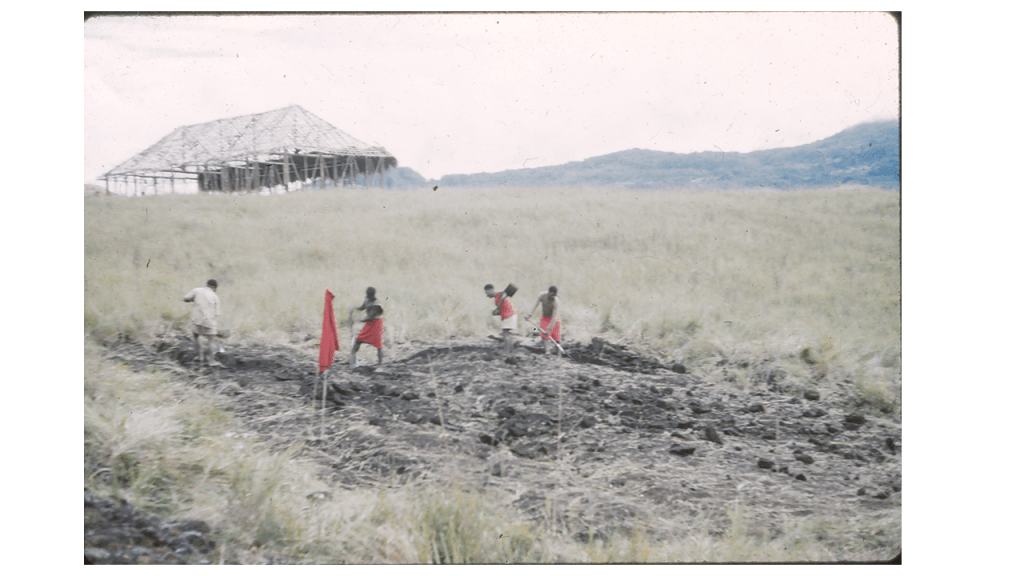
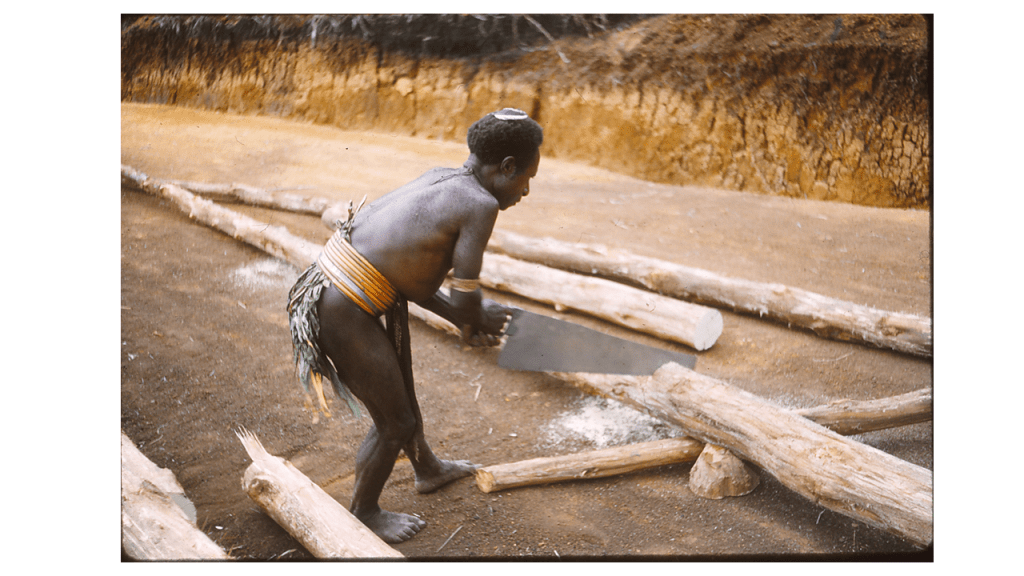
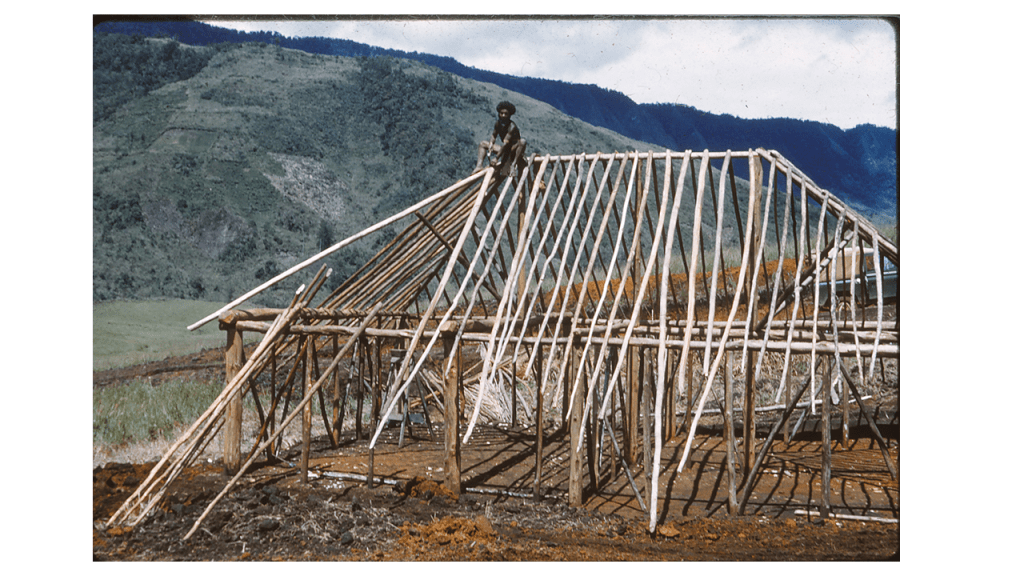


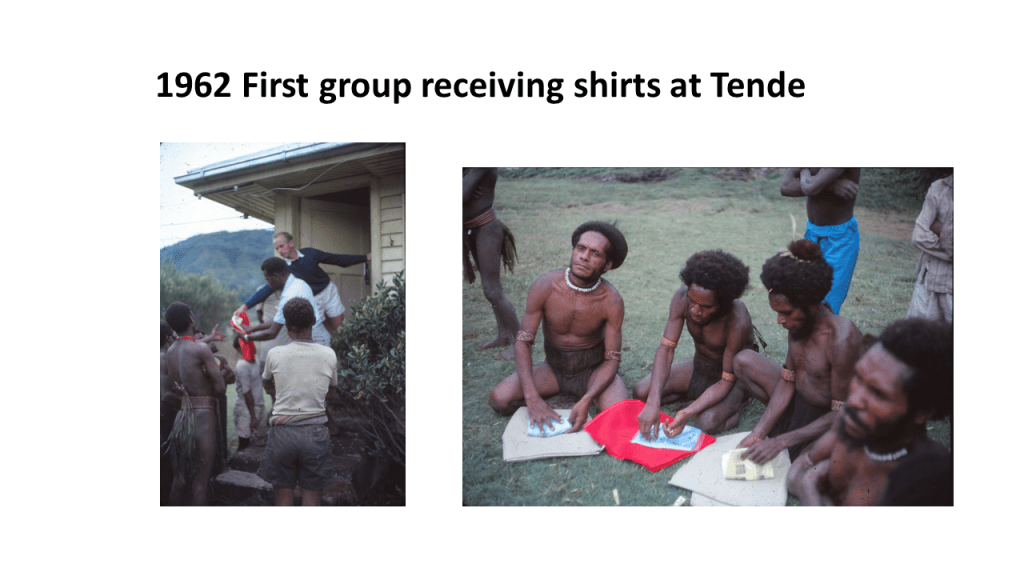
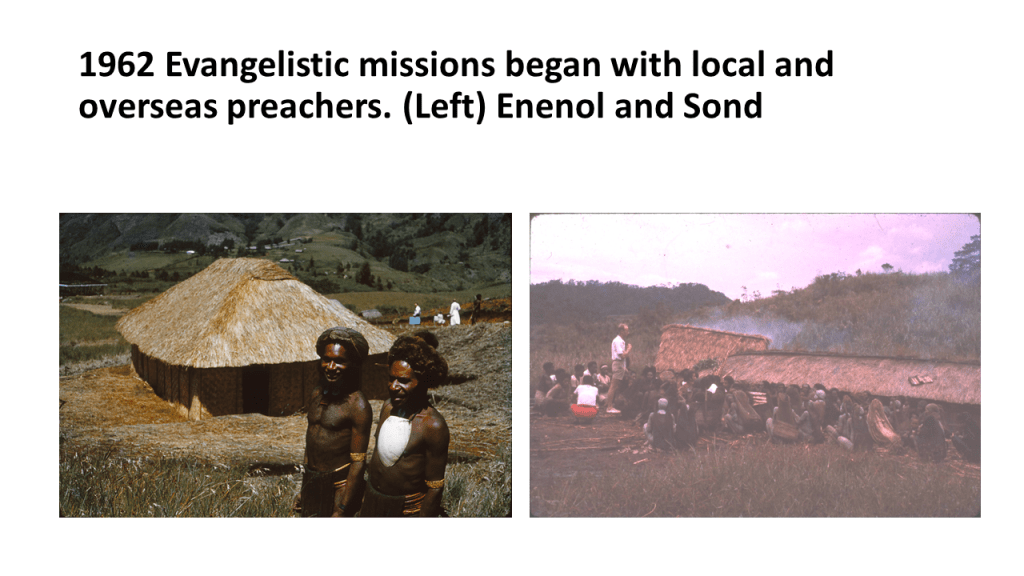
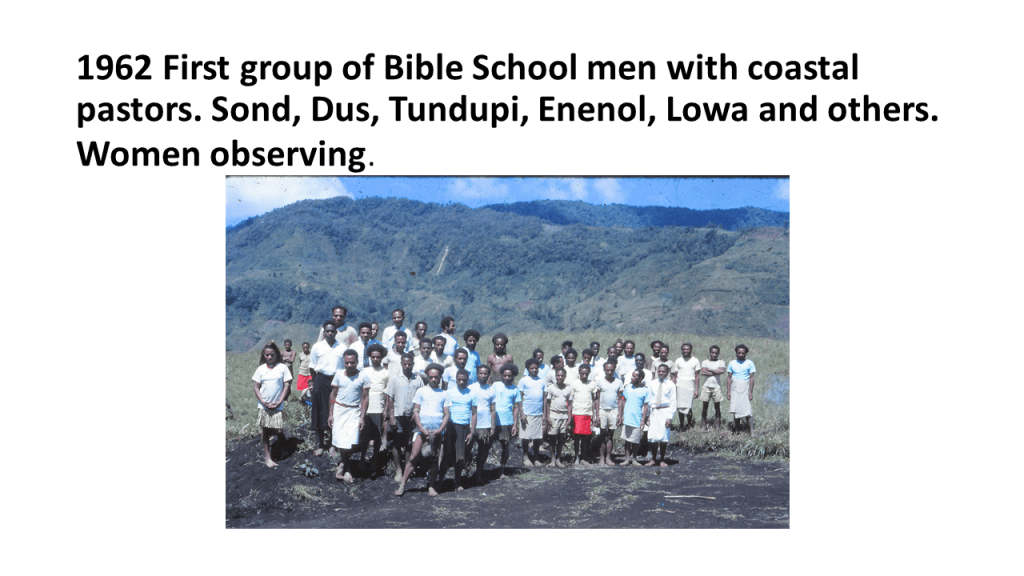
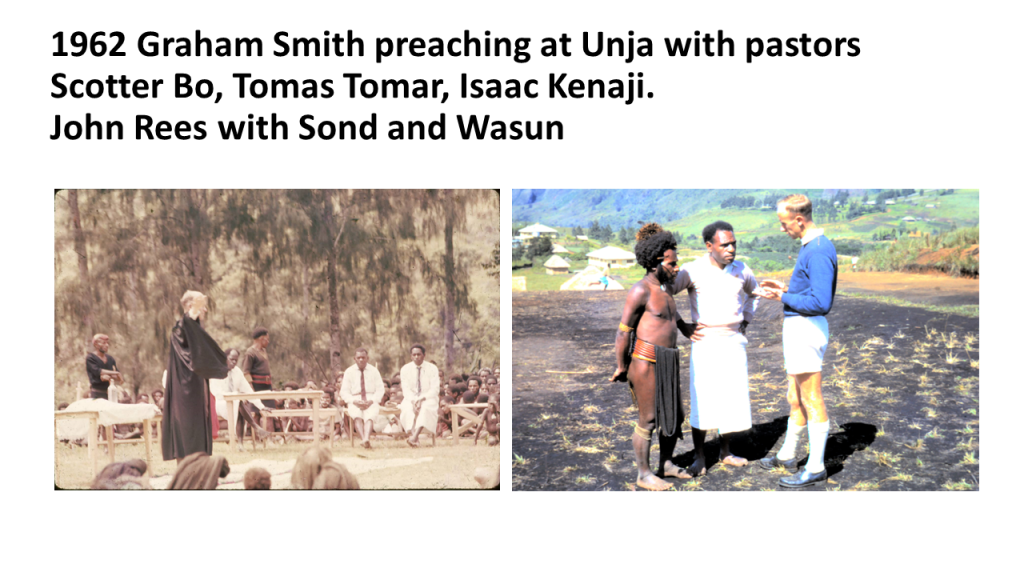
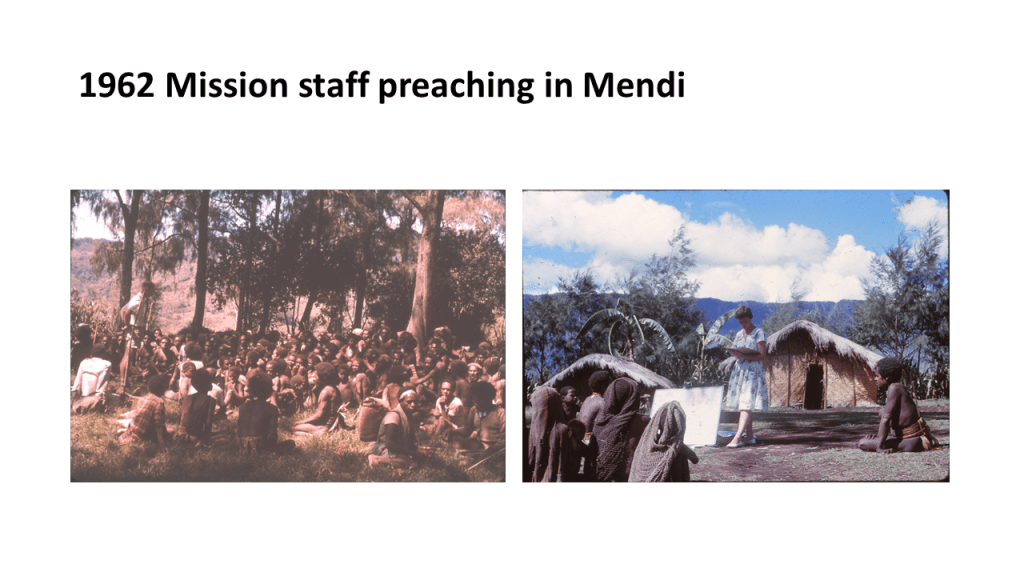
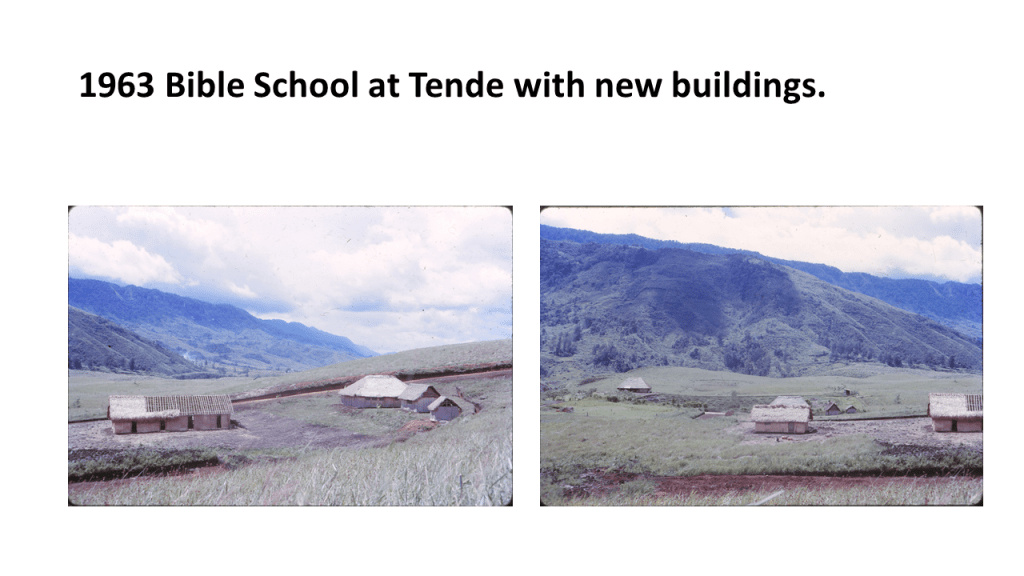


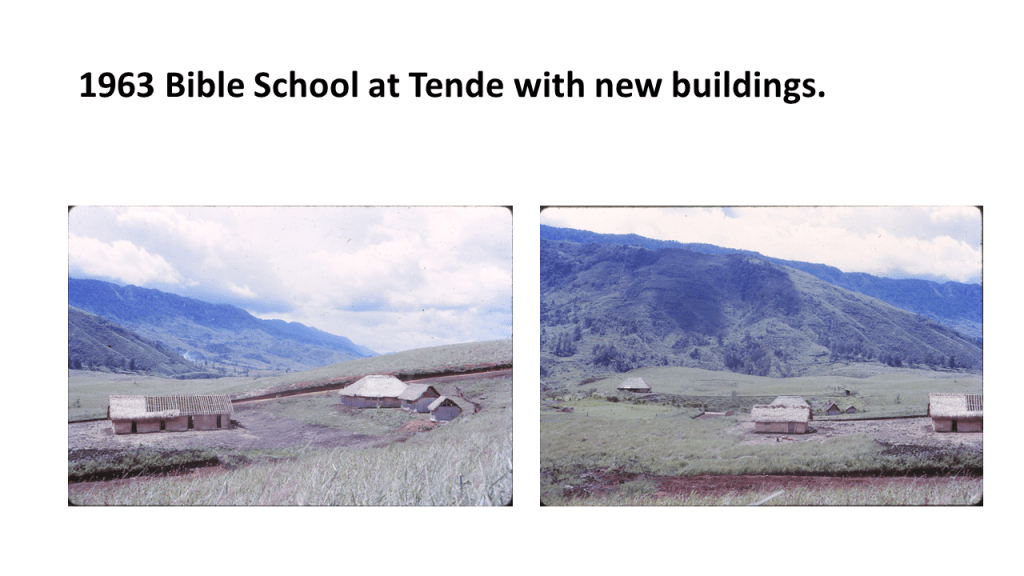

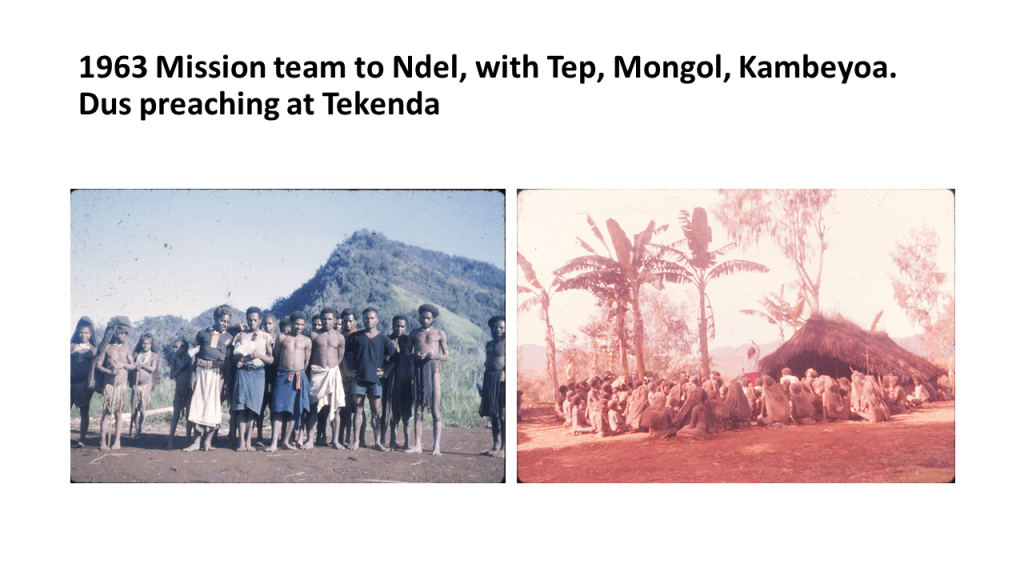


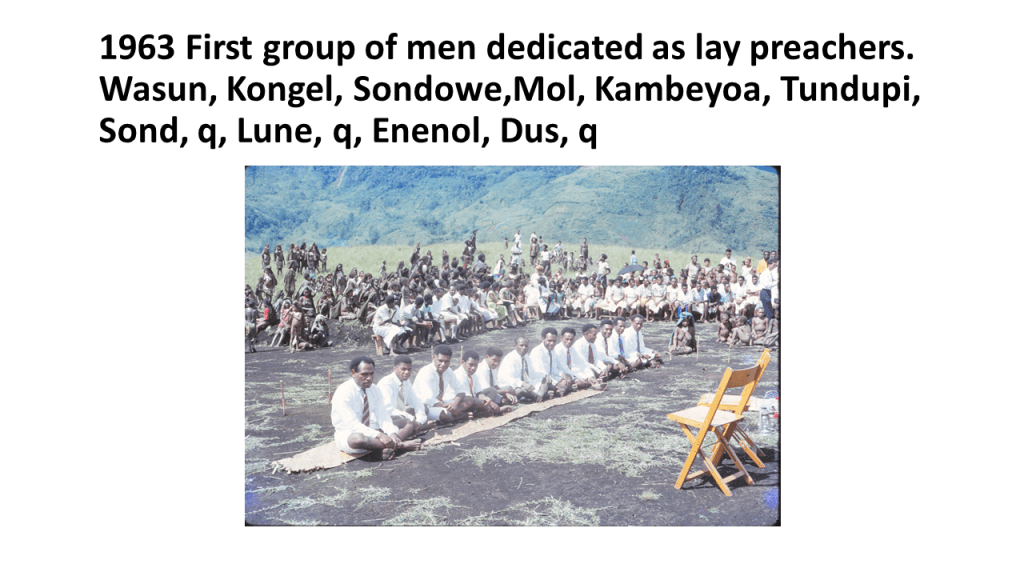
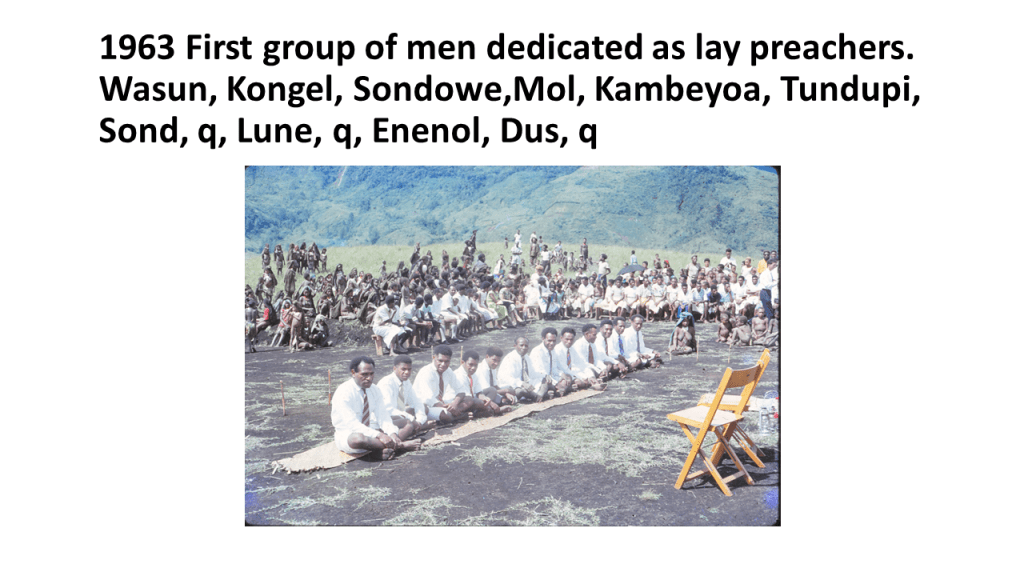


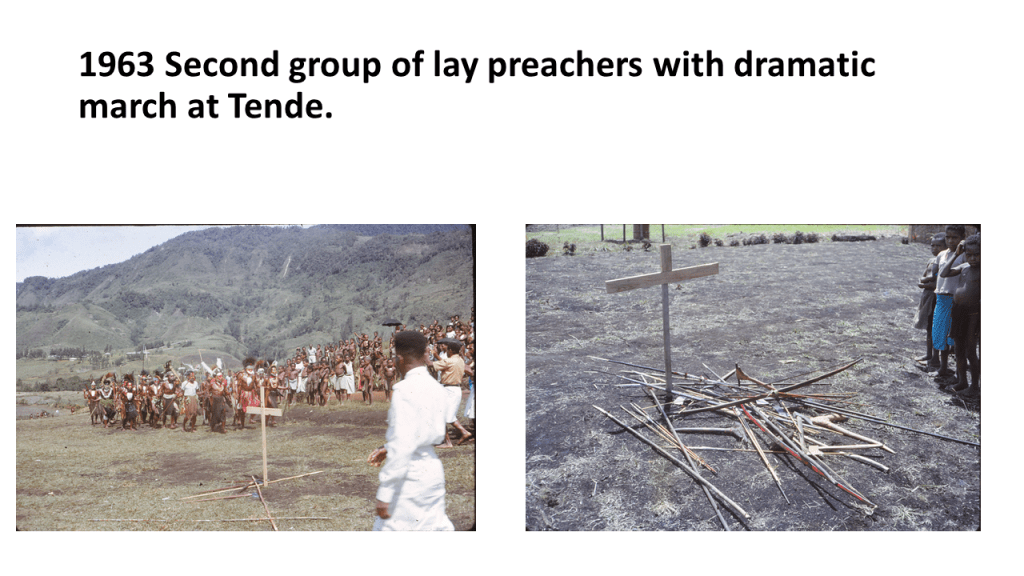


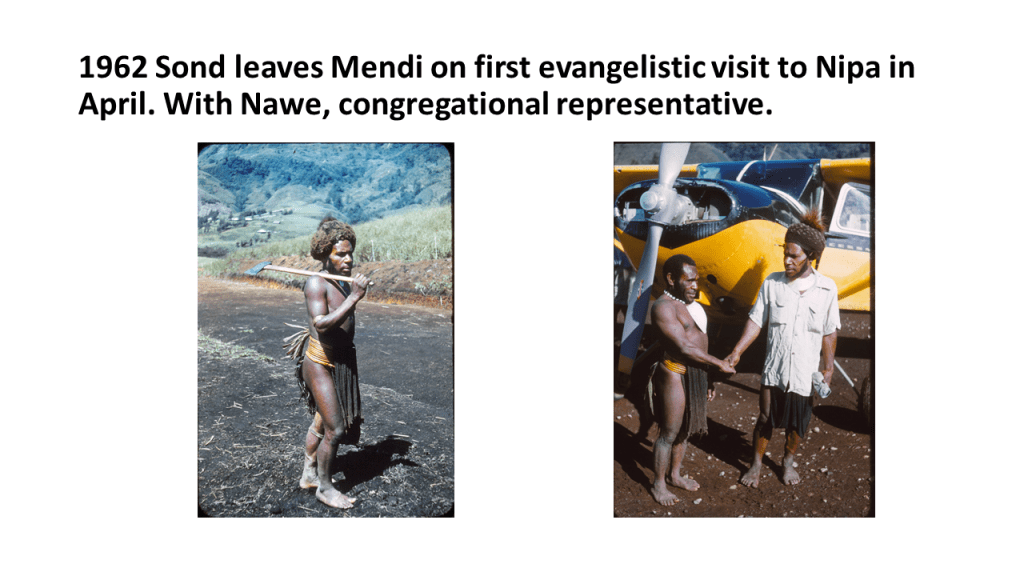
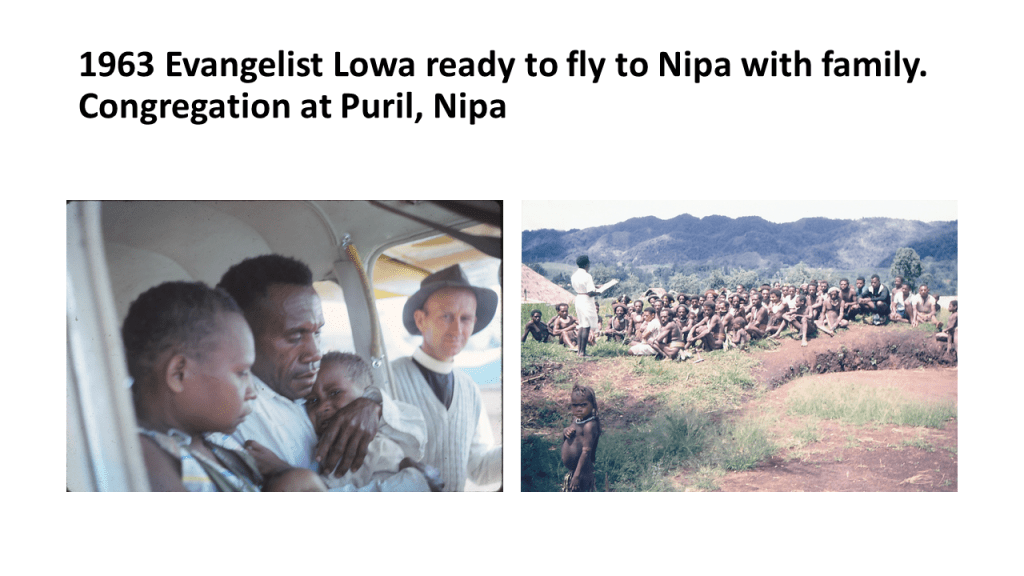
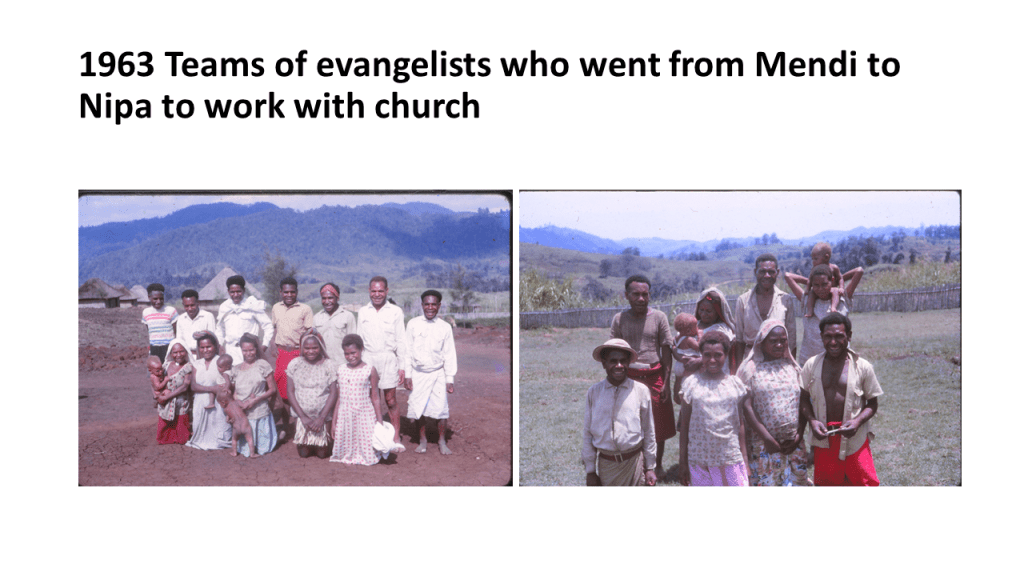
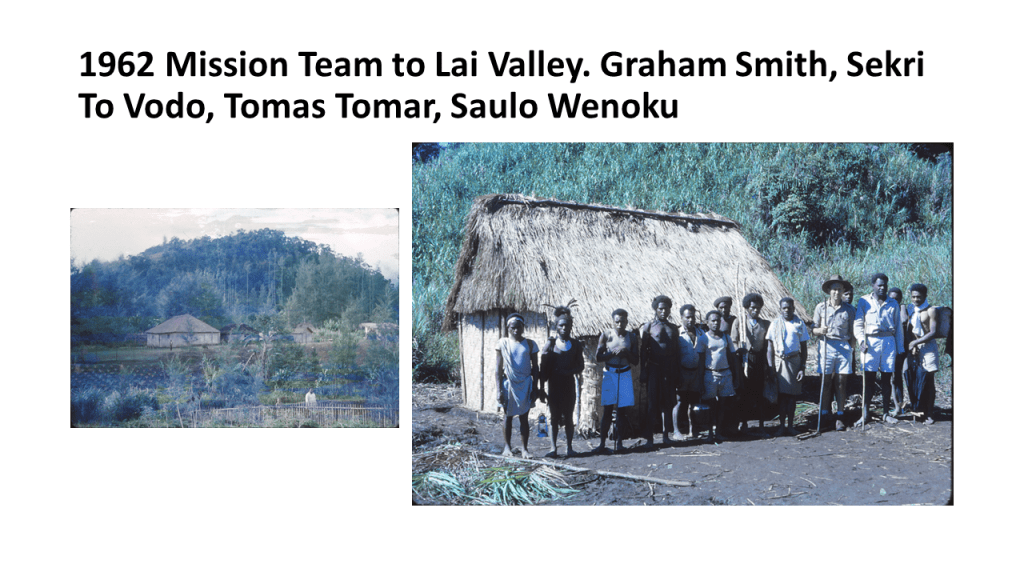


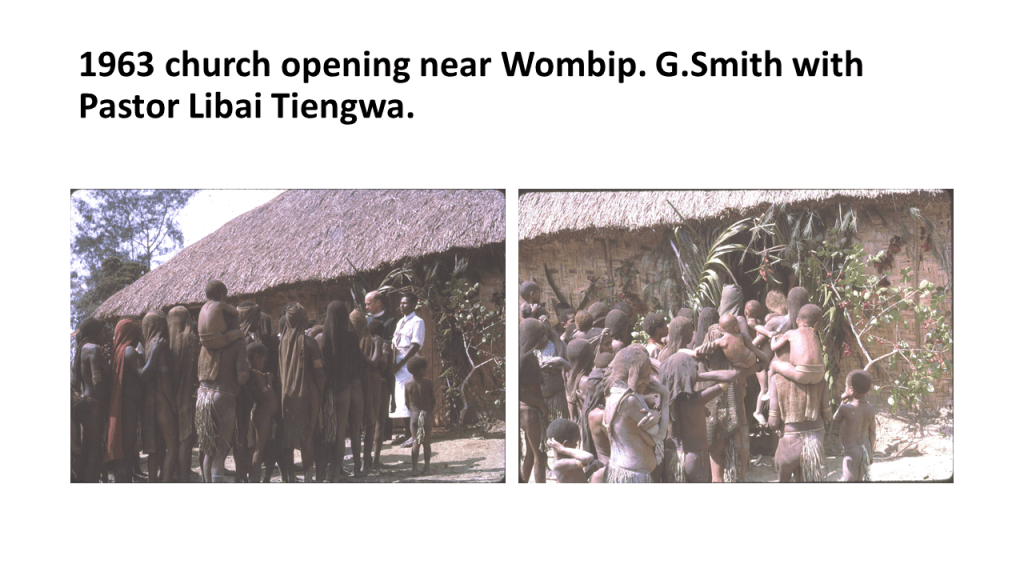
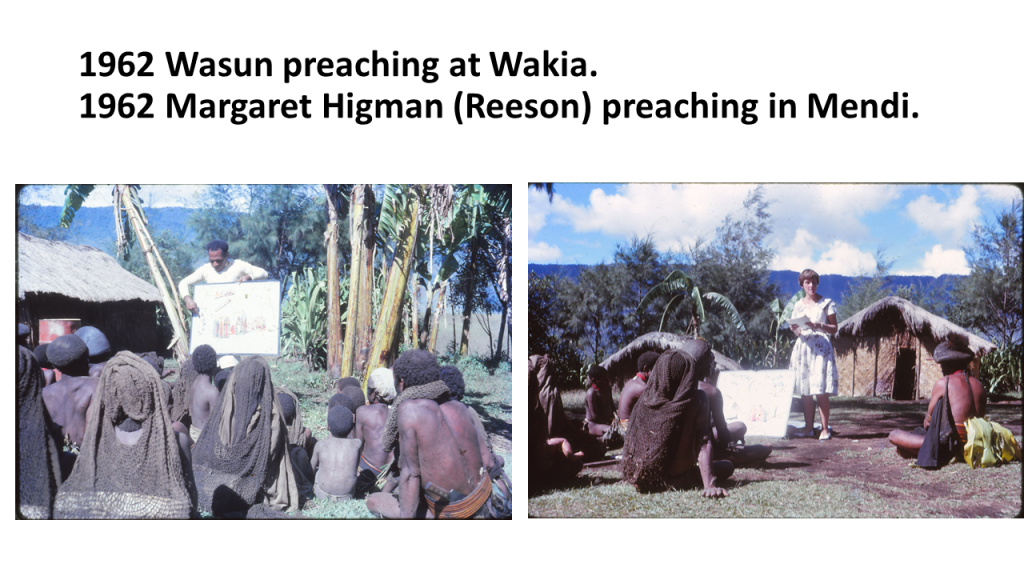

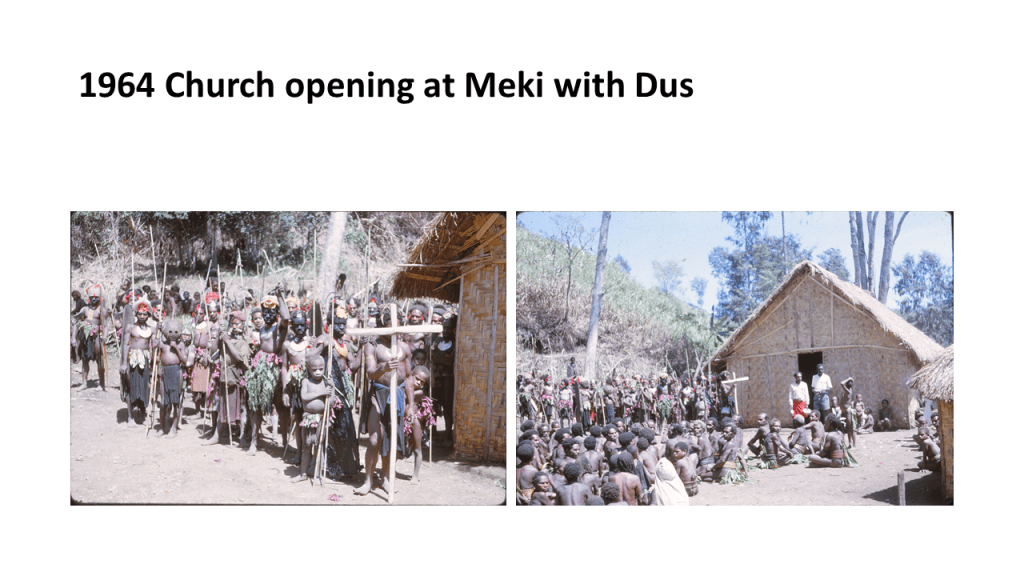
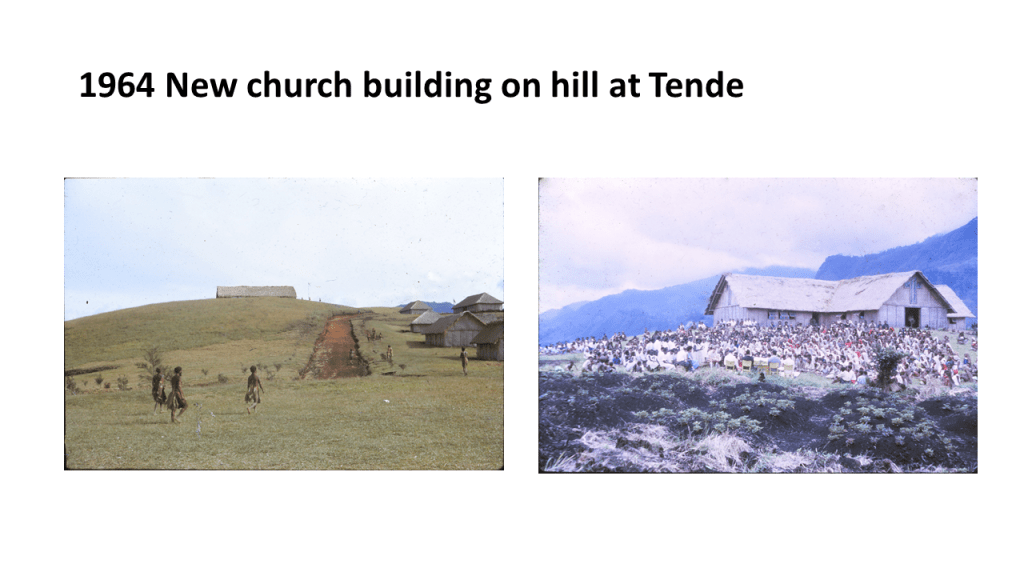
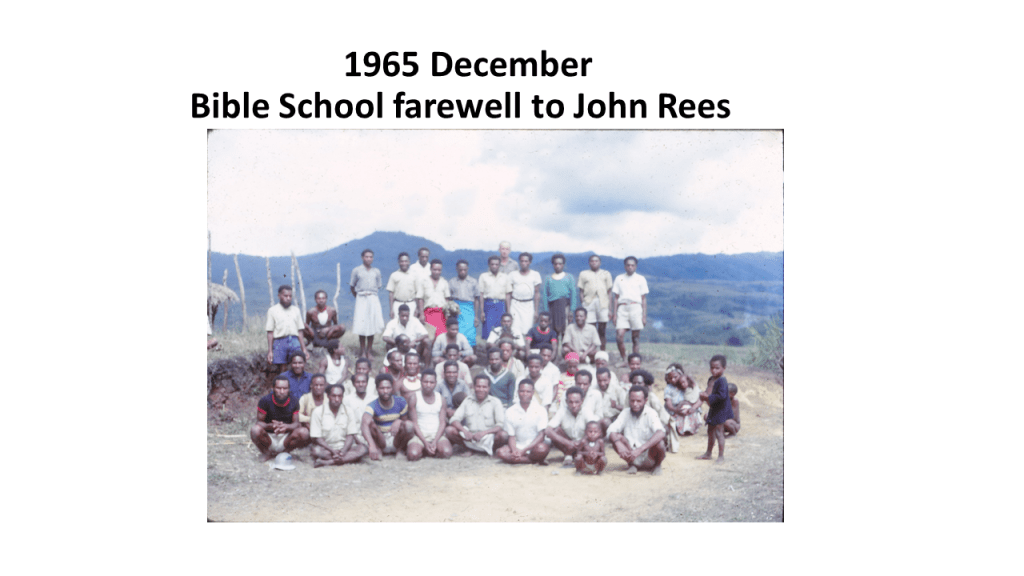

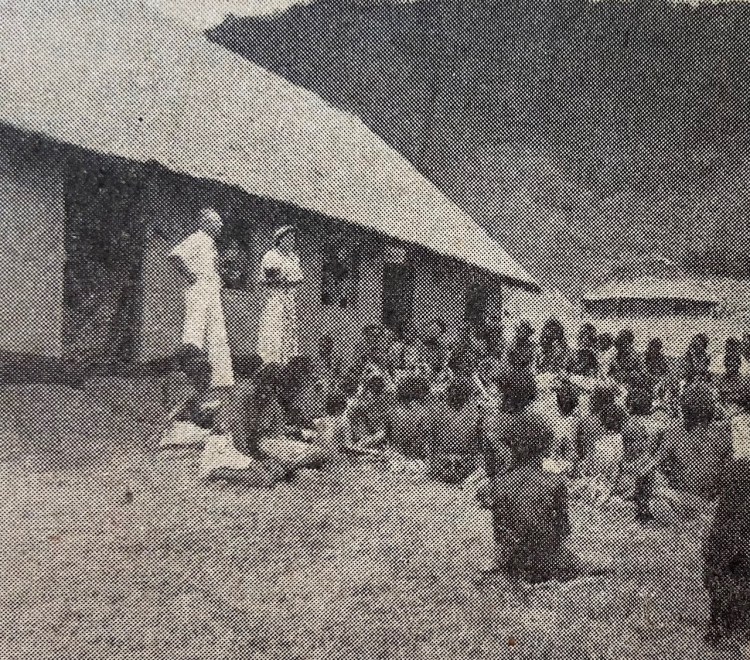
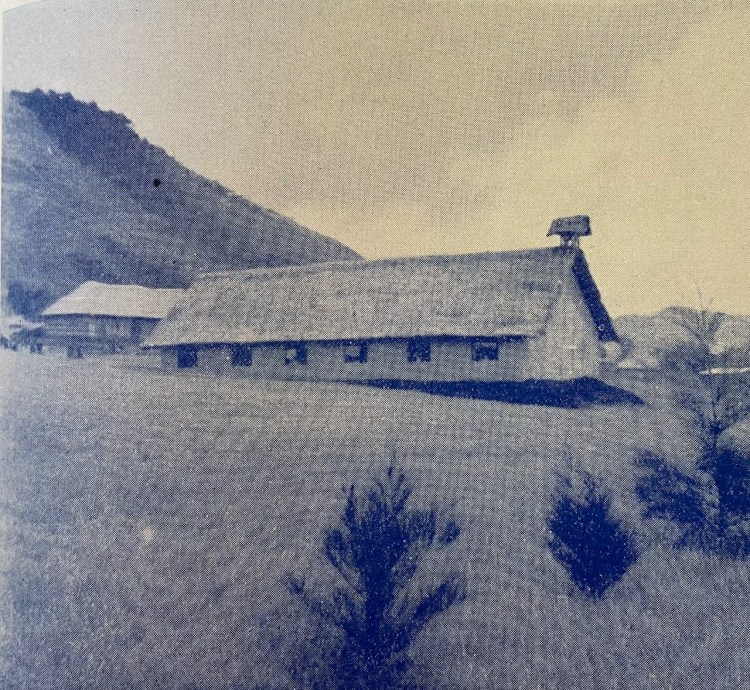


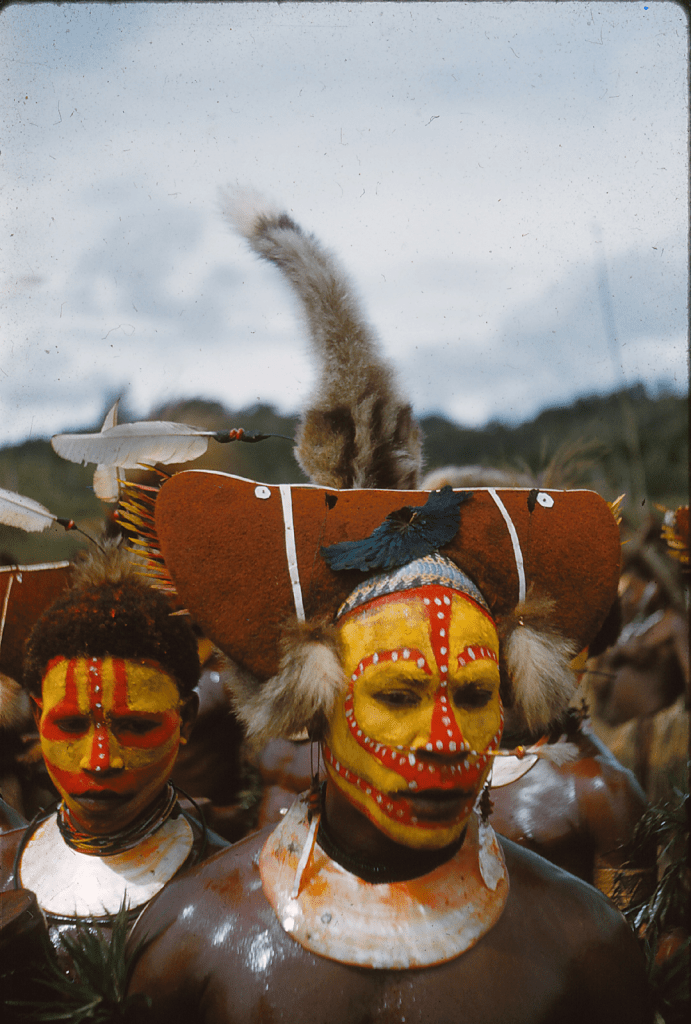
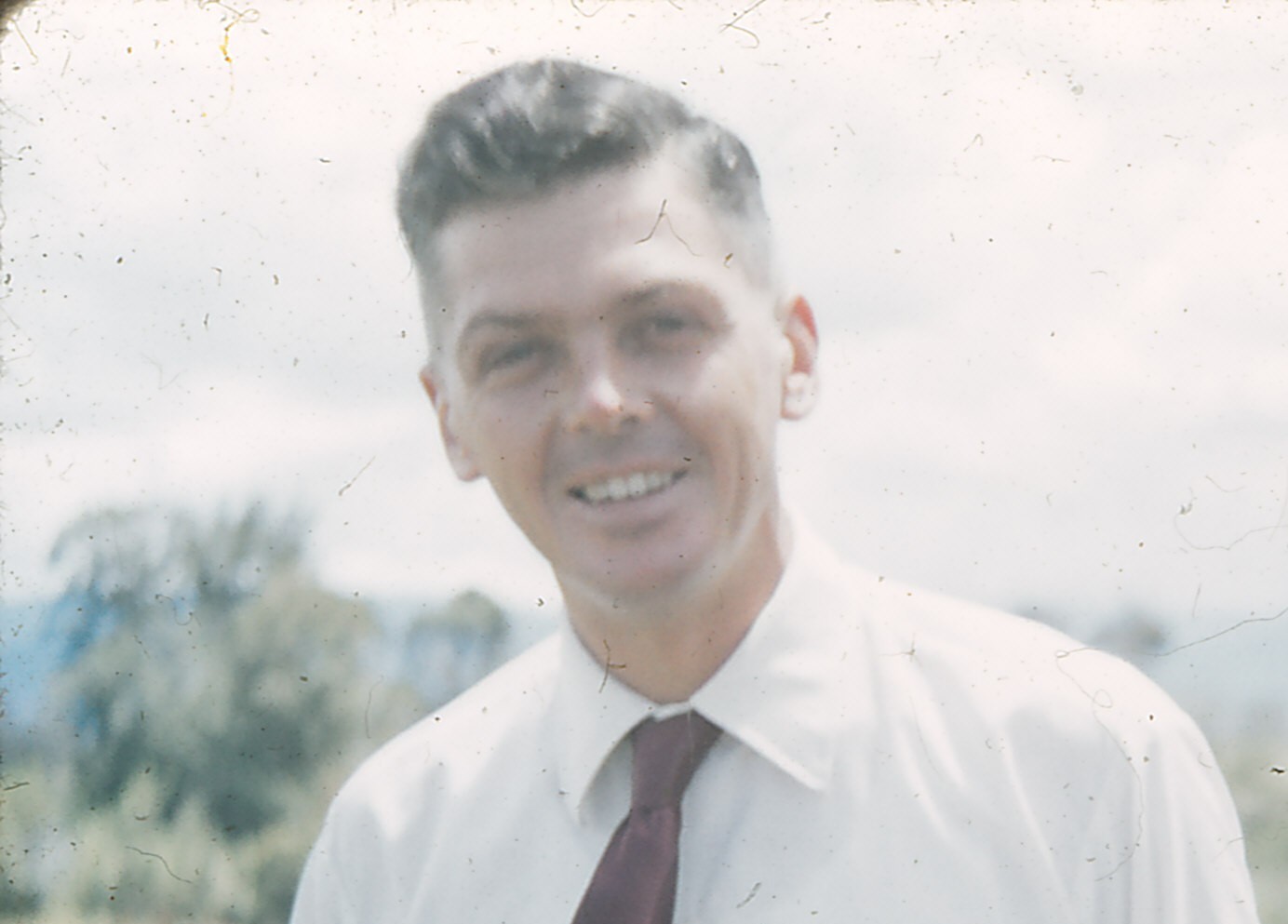
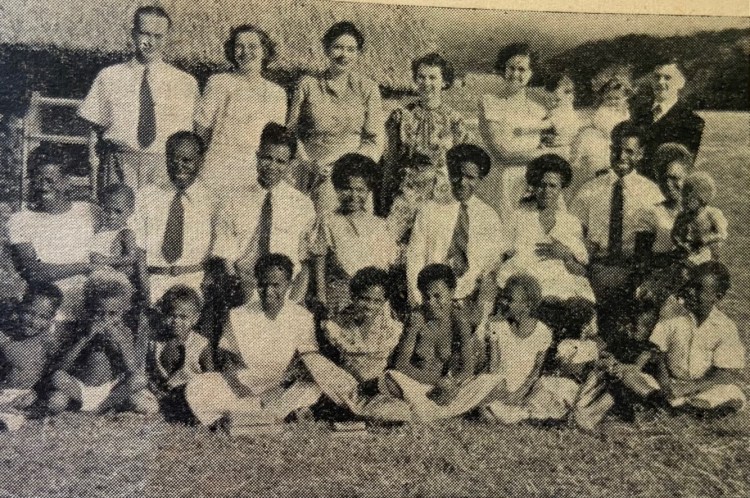
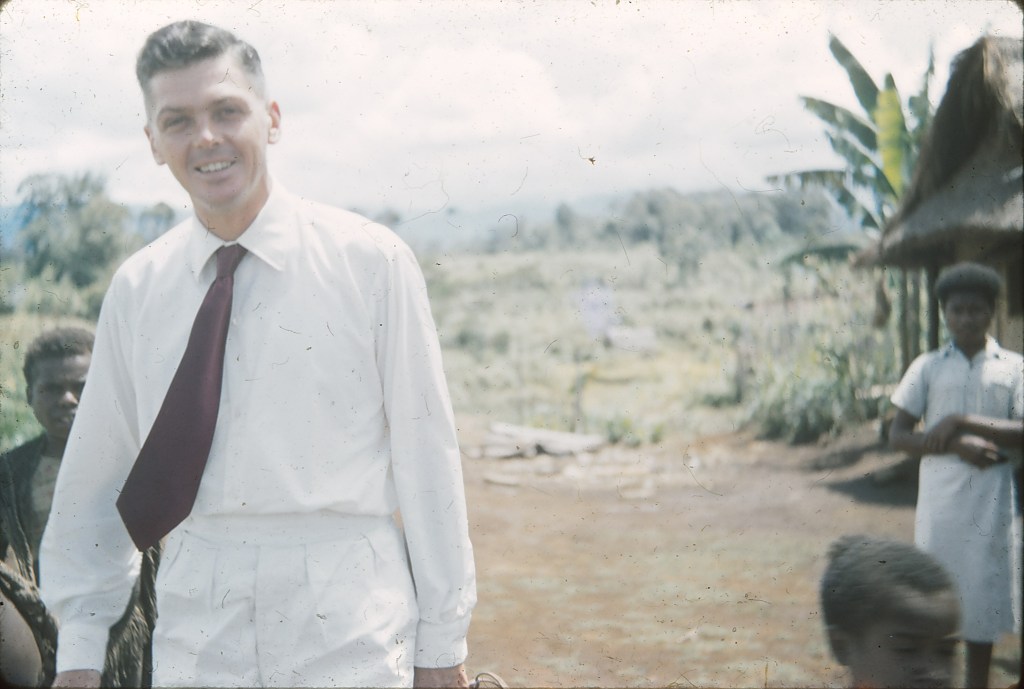


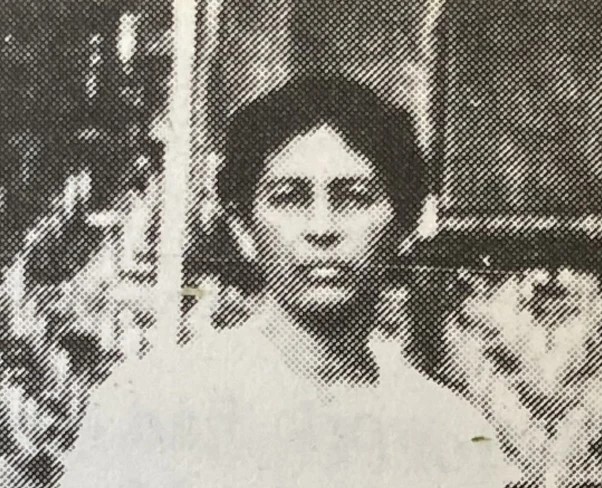


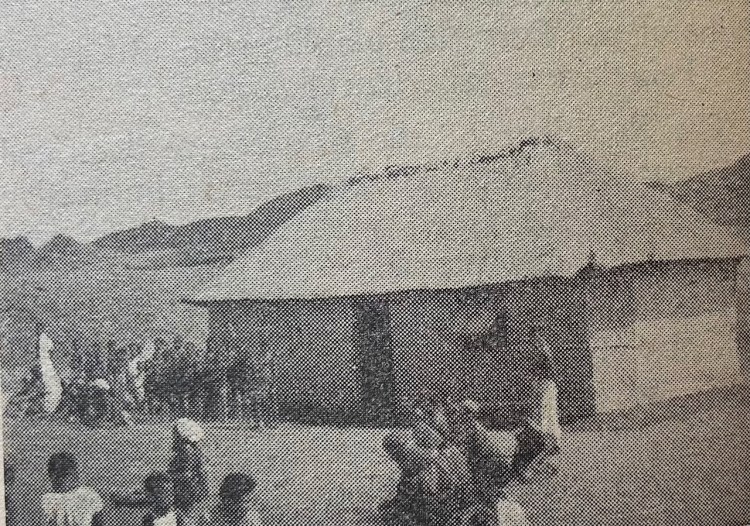

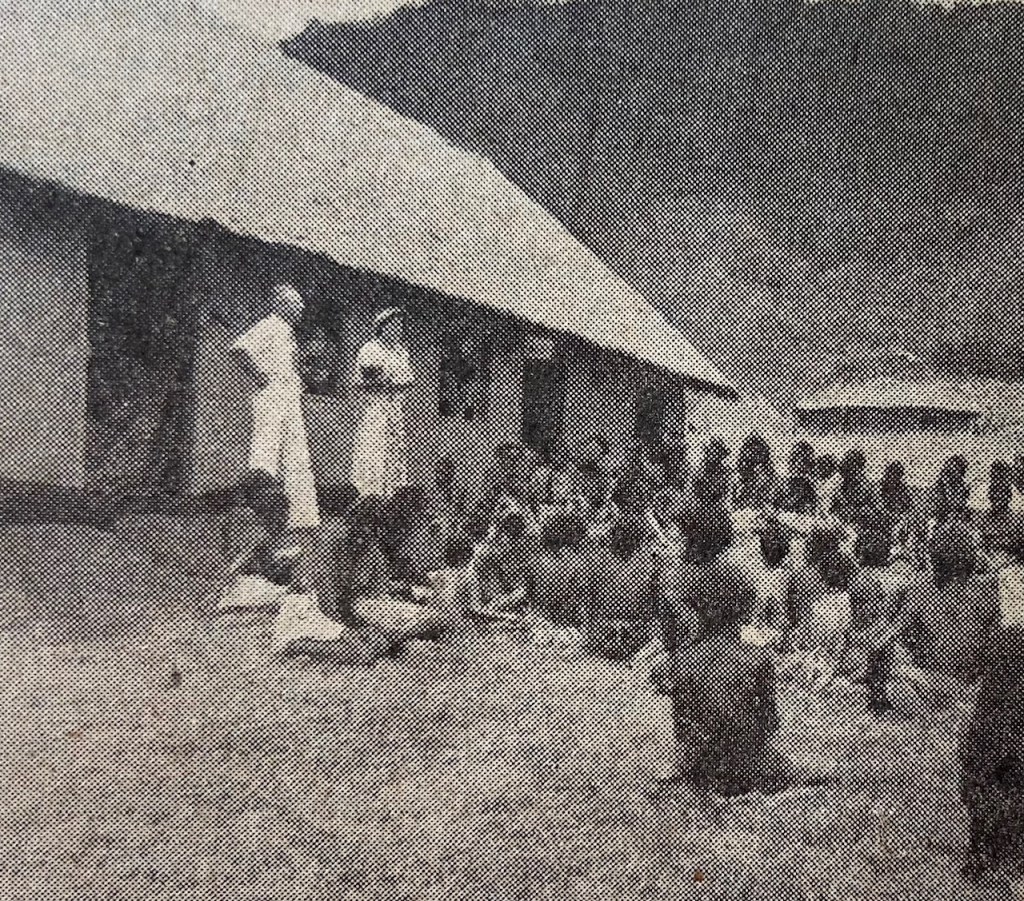

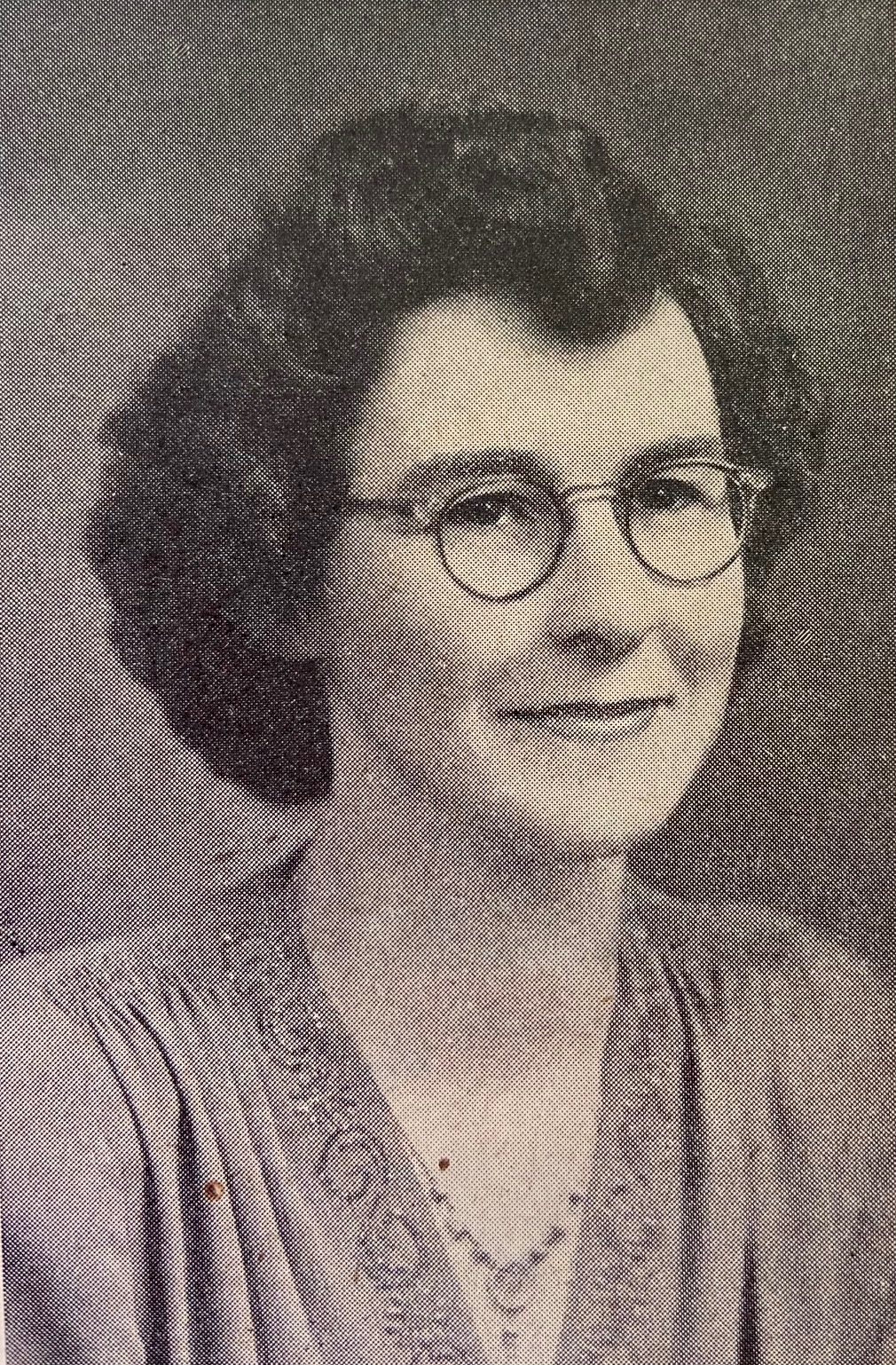


 Margaret Reeson