03. Starting a New Mission, 1950

Mendi, November 1950

As soon as Gordon Young heard that the MOM Board had approved their new mission, he was very keen to make a start.  The next time Assistant District Officer Alan Timperley went on a patrol to Mendi from Mount Hagen, Young went with him. In his first letter from Mendi, Young wrote:

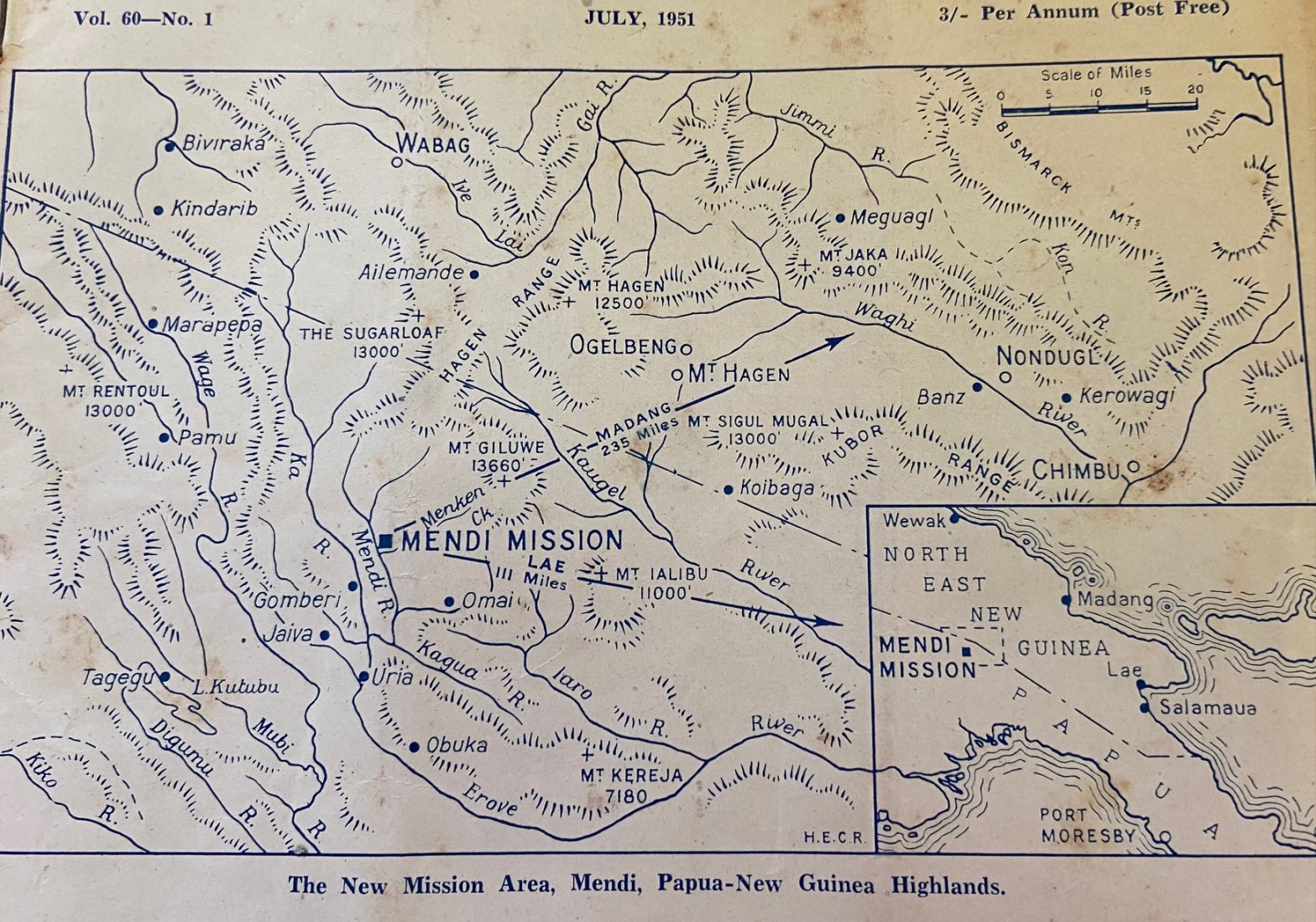
We reached here in Tuesday 21st instant,[21 November 1950] after a five days walk, without incident, from Mt Hagen. Tomas Tomar, David Bulu and I accompanied the Administration party; Kaminiel Ladi was sick the morning we left and will come in by Auster next week. The Auster was able to bring in two loads of cargo for us on Friday 17 November – 500 lbs per trip.
 
Mendi Mission Station. The Officer in charge of the Administration Station at Mendi, Patrol Officer A.T. Carey, assisted me on Friday last to select the site for our first Highlands Station, and on Saturday we surveyed the five acres for the Mission lease, for which I will now apply. After this is granted, I will apply for two hundred and fifty acres Agricultural lease, adjoining the Mission lease. The A.D.O. Mt Hagen, Mr A.T. Temperley, who paid us a brief visit by air this morning, has approved of the site we selected, so we move there today. We intend building temporary buildings this week and next week to commence planting gardens; at the same time learning the language of the people.
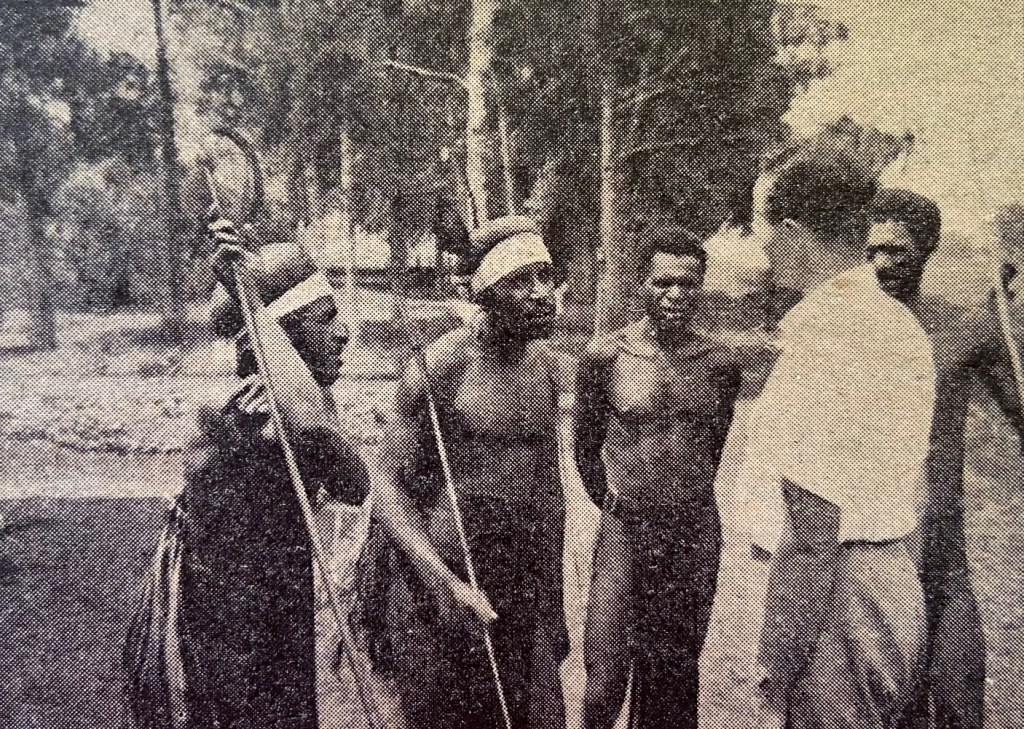
Rev Gordon Young, The Missionary Review 1951
Rev Gordon Young and locals at Ogelbeng, 1950

In Young’s next letter, he wrote:

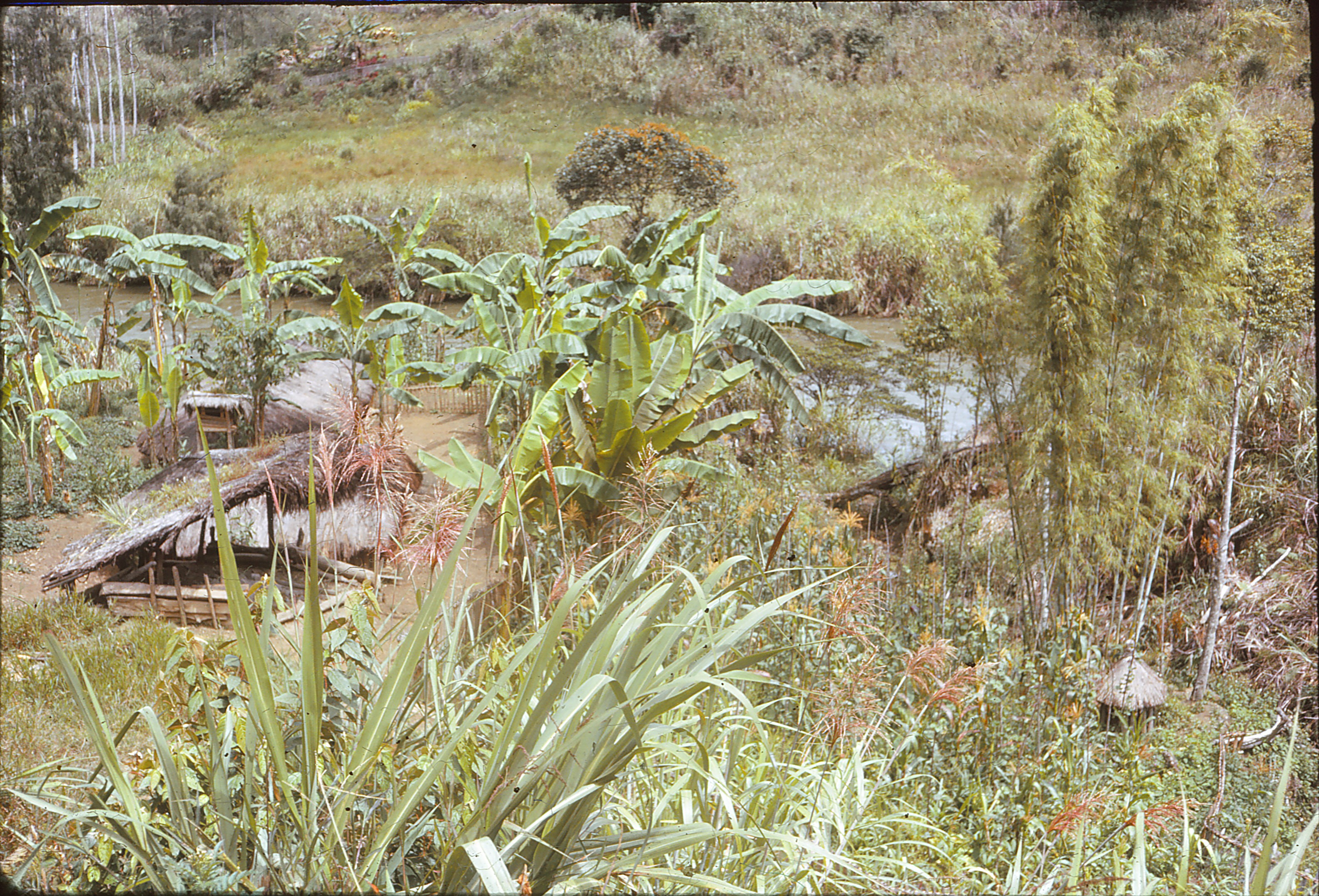
We commenced the establishment of this station on Tuesday last, 28th November [1950]. We have a quarter of the five acres cleared and some temporary buildings nearly finished. In the meantime, we are living in tents; mine is made of six lengths of unbleached calico for the tent and six for the fly, the ends being filled with kunai grass.
 

Rev Gordon Young, The Missionary Review 1951

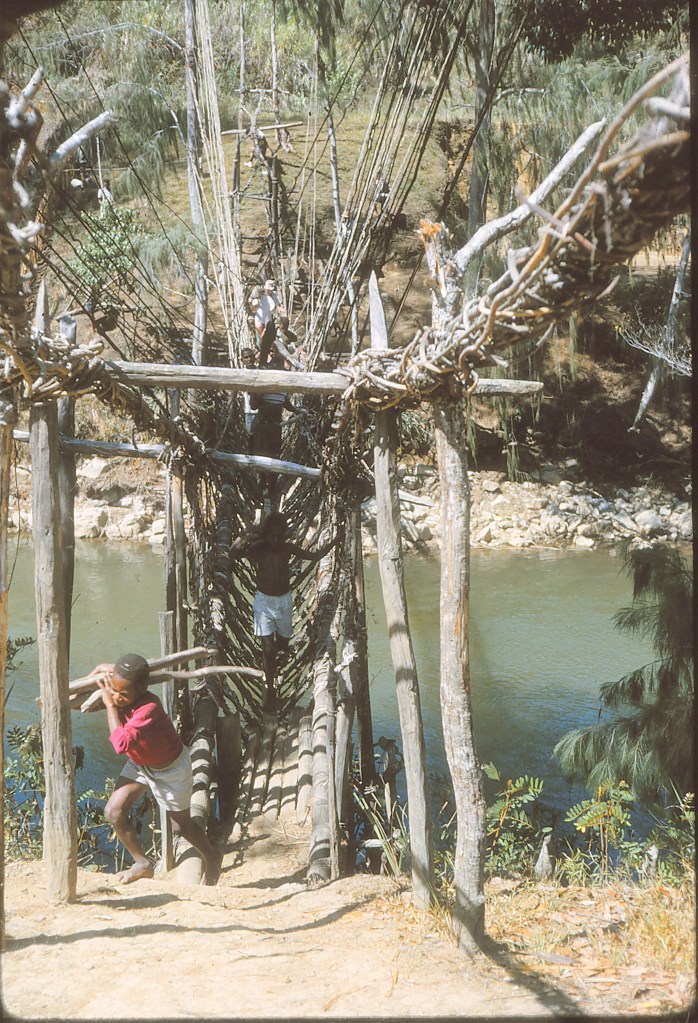
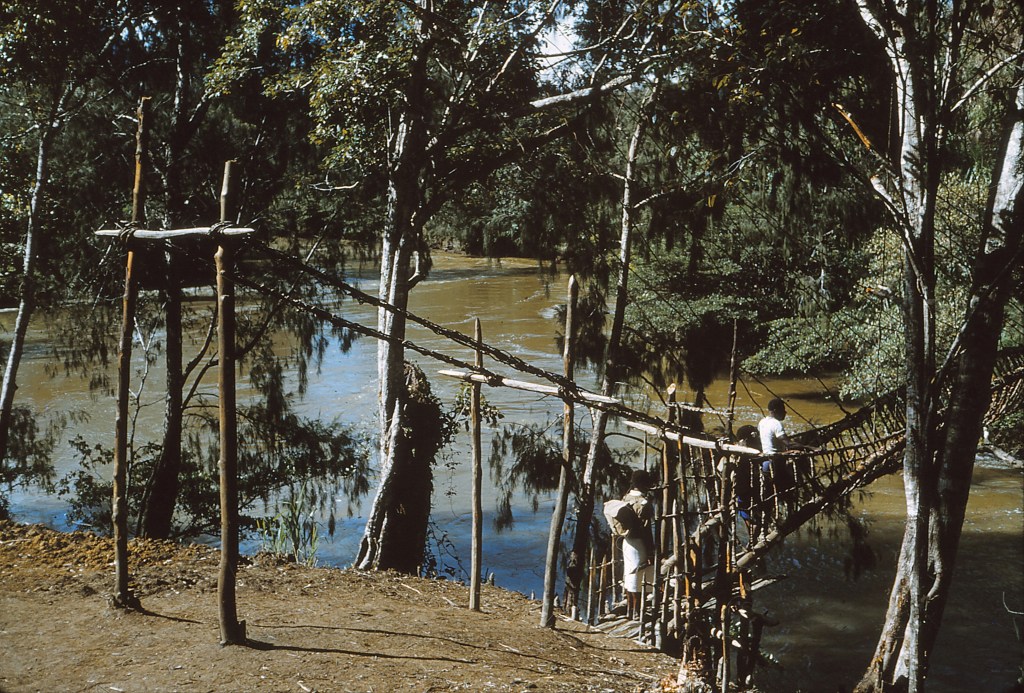
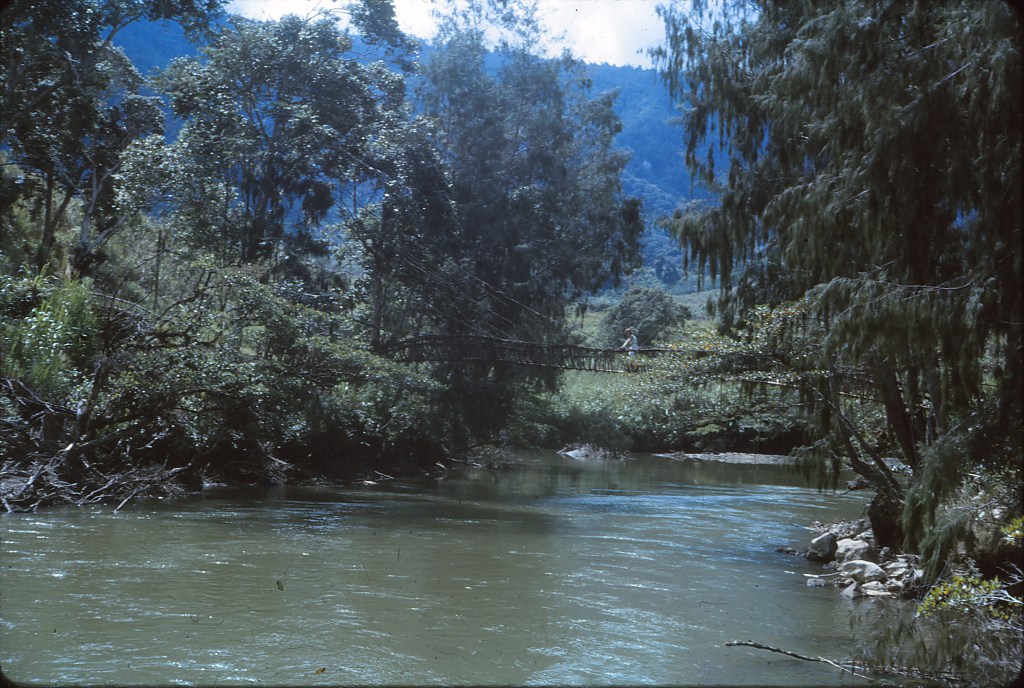
The local people saw the newcomers and the advantage of having access to some of their wealth. People had been paid for their work on the airstrip and with new buildings at Murumb. When the people on the east of the river saw that one of the white men and his workers were setting up camp on the west side of the Mendi River, they were not happy. One day when Gordon Young was visiting the patrol post on the east of the river, some warriors arrived to break the vine suspension bridge. When Young returned to the river, they found the vine bridge dangling in the river. They were cut off from their new mission lease. The people on the west side, the clans of Unjamap and Poromanda, led by clan leader Urum Tiba, were furious. If the newcomers were bringing wealth, their people wanted their share.  Urum Tiba called for his people to come quickly, to collect timber and strong bush vines and to rebuild the suspension bridge. They worked so quickly and well that after five hours of hard work Gordon Young and his friends were able to cross over the river and go back to their new home. (Many years later, when the Highlands church celebrated the coming of the mission to their land, they loved to re-enact the story of Gordon Young and the broken bridge.)

There were many misunderstandings in those early days of contact. The people of Mendi and the newcomers could not understand the language of the other. They watched each other and were puzzled and surprised at what they saw. What did this mean? Were these strangers the spirits of their ancestors come back to life? Were they dangerous?

The Mendi people did not understand what was going on. For six days, young men came to see the newcomers and were given spades and encouraged to help clear the land. They were promised axes or pearl shell for their work. But on the seventh day, the white man and his helpers did not bring out any tools. The Mendi men watched them. They were sitting on the ground together with their eyes closed, and talking. ‘Has their brother died? Are they sad?’ they asked each other. When the little mission group began to make a noise together, the Mendi men were sure that someone had died. To them, the sound they were hearing was the sound of sad wailing, not music. It would be some time before they understood that the newcomers did not do their usual work on the seventh day and that the mission group were praying and singing.

In his flimsy temporary tent of cloth and branches one night, Gordon Young did not know that he was being watched. Outside in the dark, a group of Mendi men armed with bows and bone-tipped arrows waited and watched. They were angry because one of their clan members had been arrested for stealing from the mission tents. Shadows moved against the cloth from the small hurricane lantern inside the tent. The warriors planned to shoot the stranger when he put out his light. They waited and waited but that light still shone. The stranger also had a small light on a stick and they decided that they would need to capture that, too. At last, they decided to go home and leave the stranger alone. Perhaps, they said, they would come back another day and shoot him.

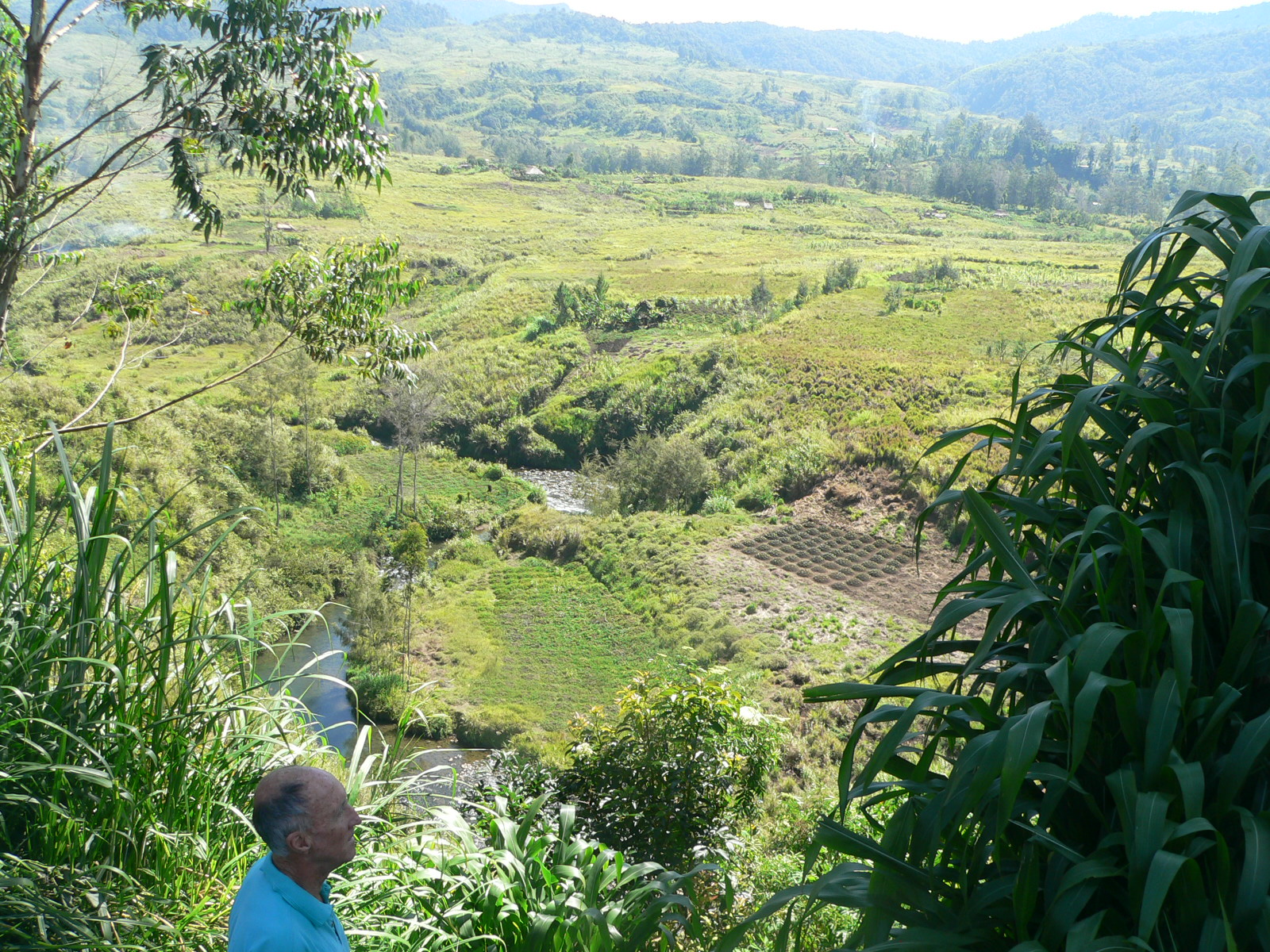
As the little group settled in at Unja, Young wrote ‘The mission site is excellent for buildings but rather exposed for gardens. The prevailing southerly has been blowing strongly for the last few months. Hope to get more agricultural land across the river Mendi later’. Although they had little experience in first aid, Young ordered basic first aid and medical supplies as he hoped to open a hospital in the future. He did his best when people came to him with wounds from tribal fighting. He wrote, Our first patient who had an arrow wound in the ankle—it went in one side and out the other—is now walking around without a stick and is one of our most conscientious workers’.

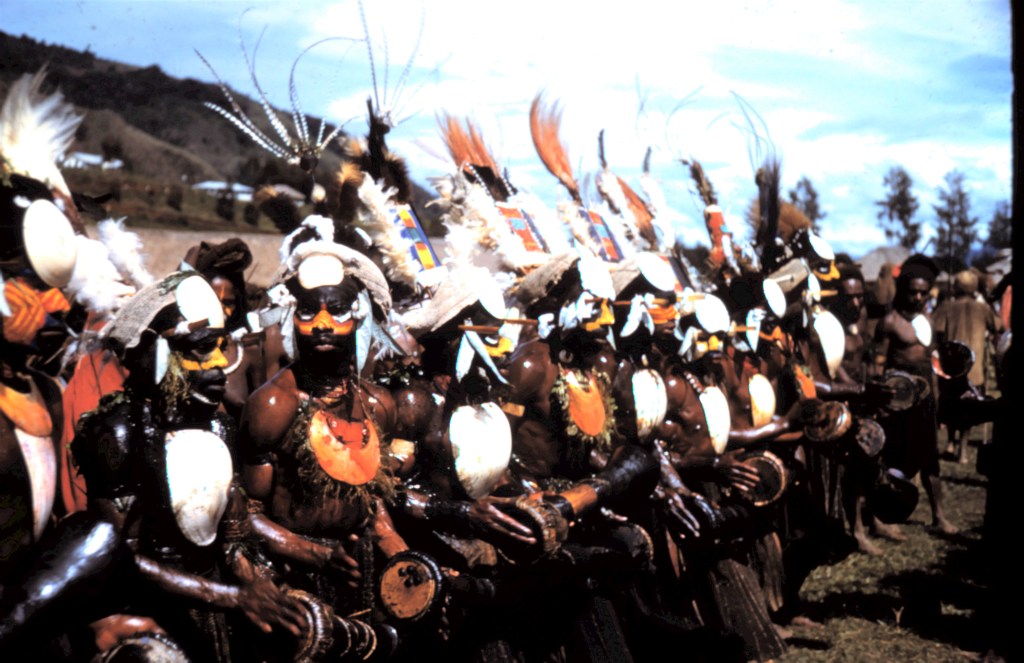
In March 1951, Young and his pastors heard news that there would be a great dance at the ceremonial ground near them. They thought that this dance would be for the people who lived near them. They had not seen a great singsing dance in Mendi before. They were very surprised when hundreds of people came to Unjamap, some of them from far away. They danced all morning. Young wrote, ‘The organised dancing continued until noon. An interesting feature of the promenades and circular dances being the way girls and young women were interspersed with the youth and young men.’ Gordon Young thought that this great dance was a sign that the people were happy that he had come and wrote

‘This celebration was to express the joy of our presence here, doubtless the first pay day on the first of this month, when they received payment in axes and knives for their services also the good quality gold lip shell they receive for sweet potatoes are factors which influence their primitive minds. However, the Christian living of native teachers is an effective witness among people untouched by the gospel.’
 

Rev Gordon Young, The Missionary Review 1951

Perhaps this celebration was a traditional dance that brought together many clans, and had been planned for a long time, but Young didn’t understand the meaning of it.

Six men from the island Districts were part of the team that made the first survey but by March 1951 some of those men had returned to their own Districts. The men who stayed were Tomas Tomar and Kaminiel Ladi. Libai Tiengwa went back to Papuan Islands but came back to Mendi later and served there for many years. Early in 1951, Daniel Amen and Sidni To Iara from New Guinea Islands joined Young in Mendi. The little group at the new place at Unjamap were very happy when two more new men arrived to join them in March 1951. Setepano Nabwakulea was a teacher from Misima Circuit in Papuan Islands District and Timoti Newai was coming to establish a pit-saw so that timber could be prepared for the new mission buildings. Soon after arriving in Mendi, Setepano wrote a letter about his first impressions that was published in the Australian Missionary Review. In part, he wrote:

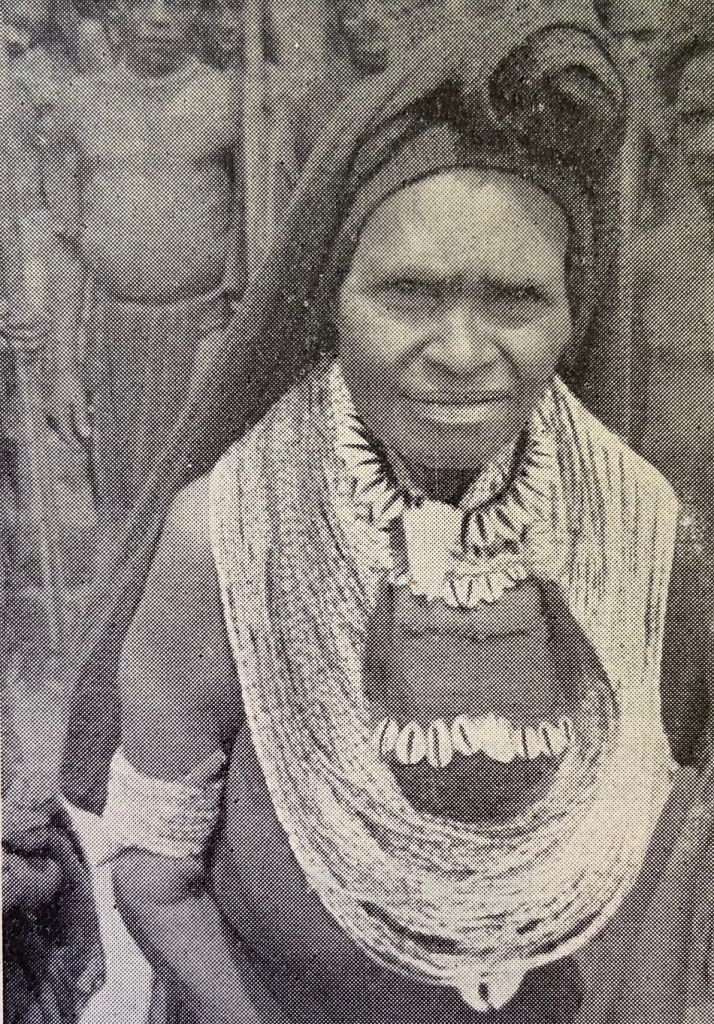
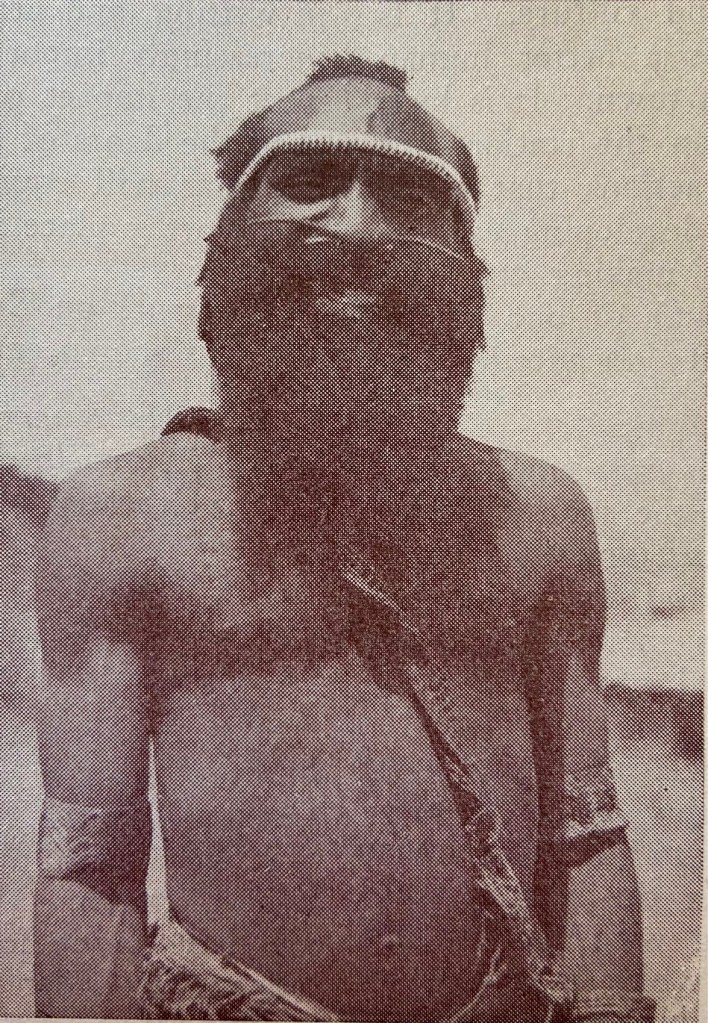
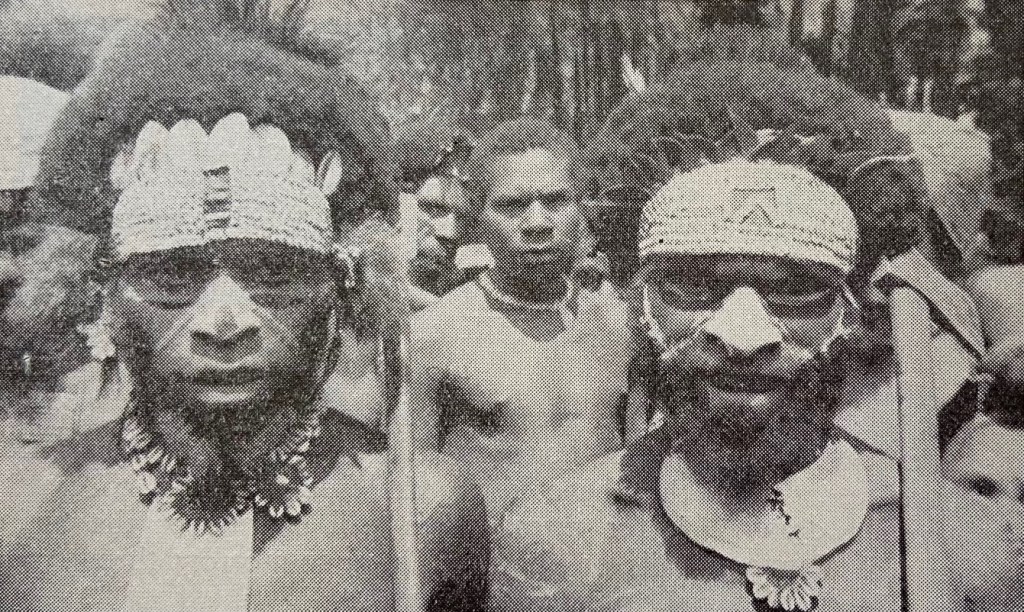
We were very surprised to see the new place and the men and women, also the different kinds of ornaments on their hair and bodies. They like very much something to see with their eyes and touch with their hands. Everything is new to them. They like the things from the sea and they use for their money a big shell called Gold Lip shell. They use many kinds of shell for ornaments. They still follow their old customs. The men carry spears or bows and arrows in their hands every day. When they walk about, they carry their fighting things with them. These men and women are still walking in darkness and their hearts are far away from Jesus. It is very hard for us to lead them out from the darkness into the light. But we believe the power of God can do this because everything is possible to Him.

Setepano Nabwakulea, The Missionary Review 1951

All these men from both Papuan Islands and New Guinea Islands gave many years of valuable and sacrificial service in the Highlands.

In the beginning, none of their wives were permitted to join them because the government did not think that it was safe. Gordon Young’s wife Grace Young was waiting at the Lutheran Mission at Ogelbeng near Mount Hagen, together with Muriel, wife of Kaminiel Ladi, Doris, wife of Daniel Amen and her sister Dulcie, wife of Sidni To Iara. These women had their own worries with health while their men were away. They all had great courage as they waited to go to a place that was unknown, strange and potentially dangerous.

Margaret Reeson 2023

Sources:
The Missionary Review January 1951, March 1951, May 1951, July 1951
The Methodist 5 May 1951; Rev John Dixon
Margaret Reeson, Torn Between Two Worlds, Kristen Pres, 1972 pp11-15
Elizabeth Priest Children of the Mendi Valley 1957.

02. Meeting for the First Time, 1950

MENDI 1950

The people of the Southern Highlands were surprised when they first discovered that there were other kinds of humans in the world. They knew their own clans, and other clans who were their enemies, as well as news of distant communities who were trading partners. The first time they saw a small plane fly overhead in about 1950, they were amazed and frightened. Some of the leaders were curious.

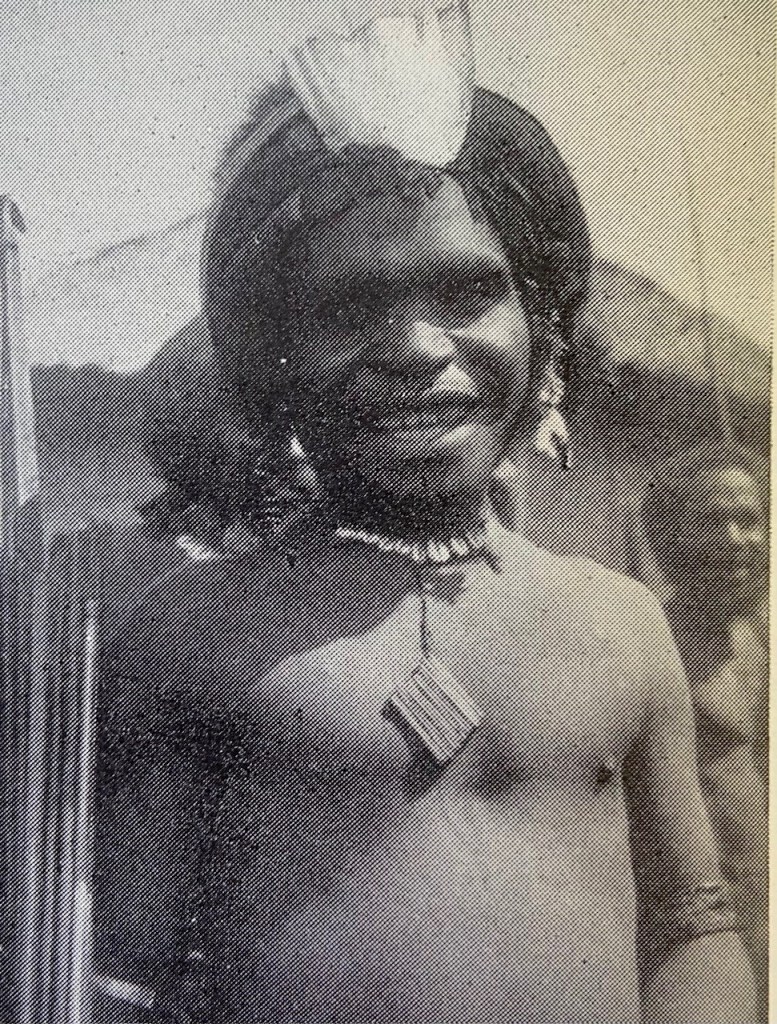
One day some of the leaders met two strangers on the track in part of the Mendi Valley. The women and children ran away to hide. They were afraid of these very different humans, with pale skin, light straight hair and an unpleasant smell. Some leading men, such as Urum Tiba of Unjamap, went to look at these travellers as they passed through their land. They did not know that these men were Australian patrol officers and that soon their world would change.

The people of the Highlands may have been isolated from the rest of the world for centuries but they were already a complete functional society. They were independent, strong minded, tribal, male-dominated, colourful, pugnacious. They were an agricultural society with traditions of connection to land, mountains and rivers. They were skilled at building, with strong houses suitable for a cool climate, and had developed the technology to build larger buildings connected to their understanding of the spirit world. Instead of living in village communities, they lived in family hamlets in their own garden grounds. A man’s house was separate from that shared by his wives, children and their valuable pigs.

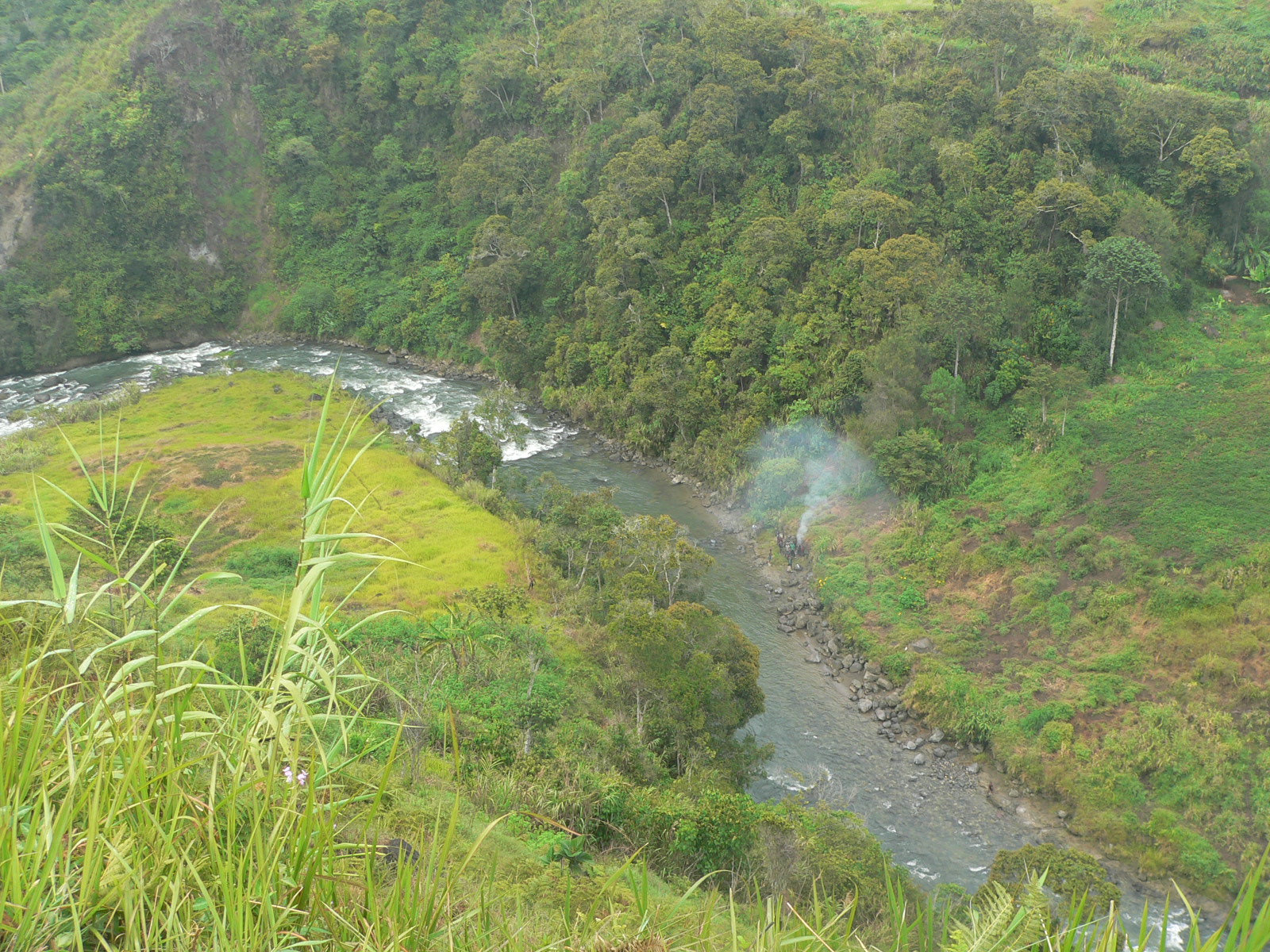
In the steep mountains, walking tracks were the best way for travel and people were strong and mostly healthy. They walked long distances and the women carried heavy loads. When mountain rivers were too wide to wade across, they had the skills to build strong suspension bridges of timber and vines. Men and women were skilled at crafts of spinning and weaving, making their own clothes from natural fibres and plant material, and their own tools and weapons. Their language was complex, sophisticated and elegant. They had a traditional system for economic exchange with neighbouring tribal groups.

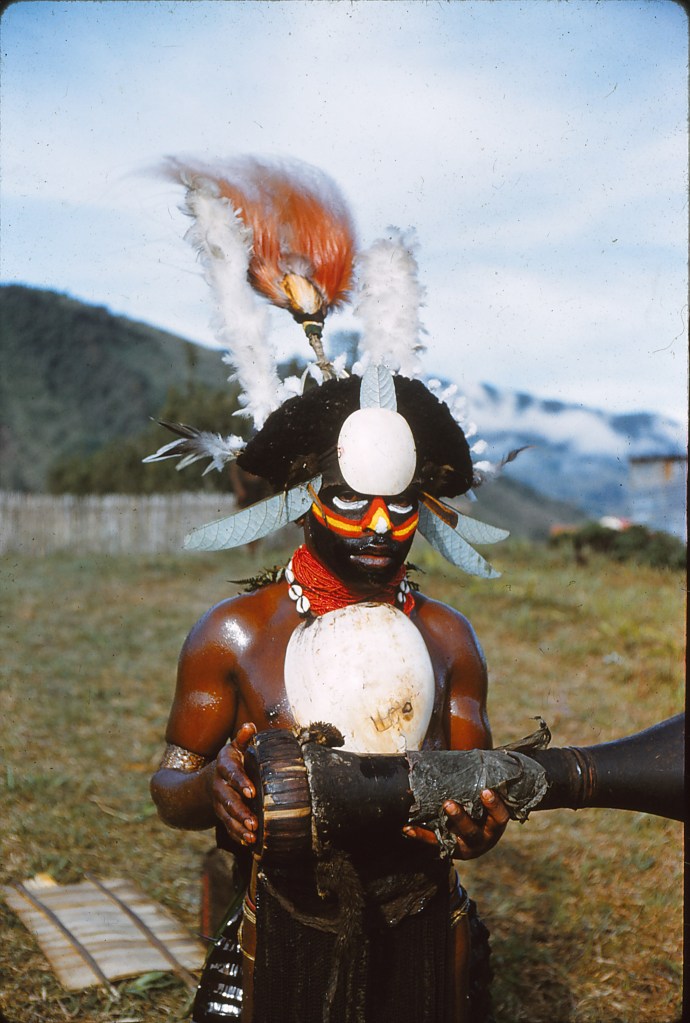
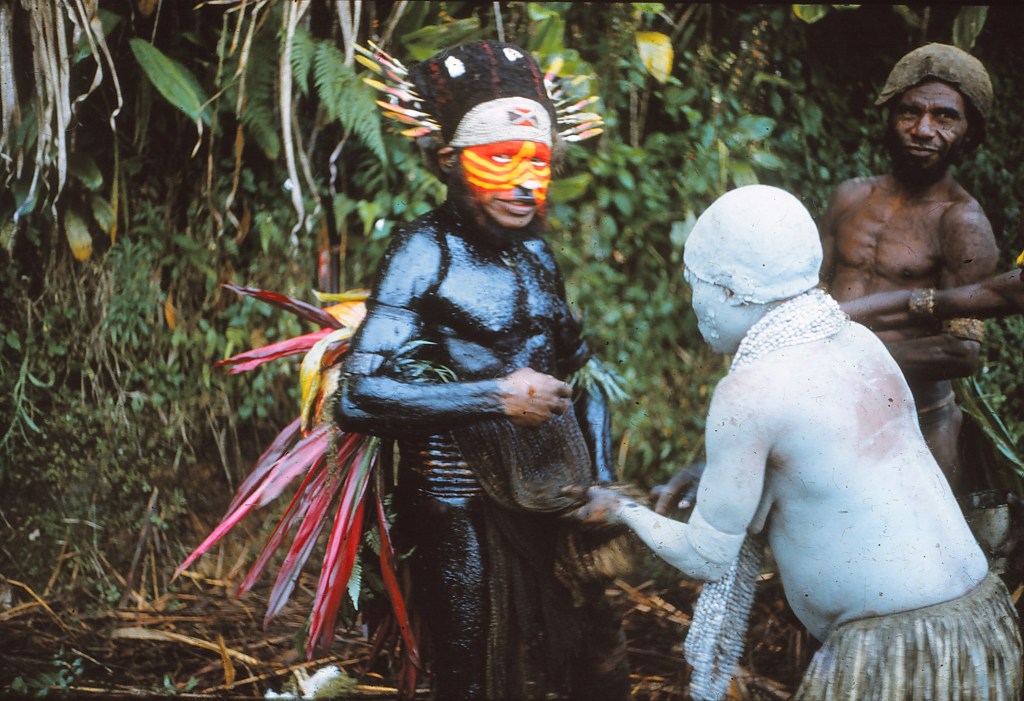
When they met for ceremonies, economic displays of wealth and sing-sings, they had strong traditions of dance, body decoration, song and oratory. Each clan had one or more ceremonial grounds, an attractive open area surrounded by casuarinas and hedges of flowering plants, always well maintained like a small park. At one end of the ceremonial ground was usually a communal men’s house behind a strong palisade, with sleeping cubicles at the back beyond the communal space with a cooking fire where men from a clan could meet to talk, eat and sleep.

They were secure in their own identity. Everyone knew which clan groups belonged together, and which groups were traditional enemies. The people of the Highlands had their own belief system and understanding of the world, visible or invisible.

After that first sight of a plane and the first visit of the white patrol officers, those white men came back to Mendi bringing pearl shell and other gifts. Soon these visitors had made arrangements to buy some land in the valley floor in an area that was often used as fighting ground and not for food gardens. The Mendi people did not know what these intruders were doing when they offered payment in pearl shell, steel axes, beads and other things and then started digging a flat area. They were even more surprised when one day a small plane flew over and dropped bundles of cargo to the ground. They wondered what was happening. When that small flat area was long enough, one day a small plane circled overhead and then flew low and landed on this rough airstrip.

The Mendi people were curious about these visitors and were interested in the gifts that they brought. The Australian patrol officers were interested in the people of Mendi and other parts of the Southern Highlands. In 1952, an Australian District Officer wrote: ‘The people of the Highlands possess a fine physique, and are noted agriculturalists. In every way, they are vigorous, virile, fierce fighters, excitable, and most generous.’

‘The people of the Highlands possess a fine physique, and are noted agriculturalists. In every way, they are vigorous, virile, fierce fighters, excitable, and most generous.’

1952, Australian District Officer

Whether they liked it or not, the world of the Mendi people, and then the tribes in other parts of the Southern Highlands, was beginning to change forever.

Margaret Reeson 2023

,

01. Pioneers to the Highlands, 1950

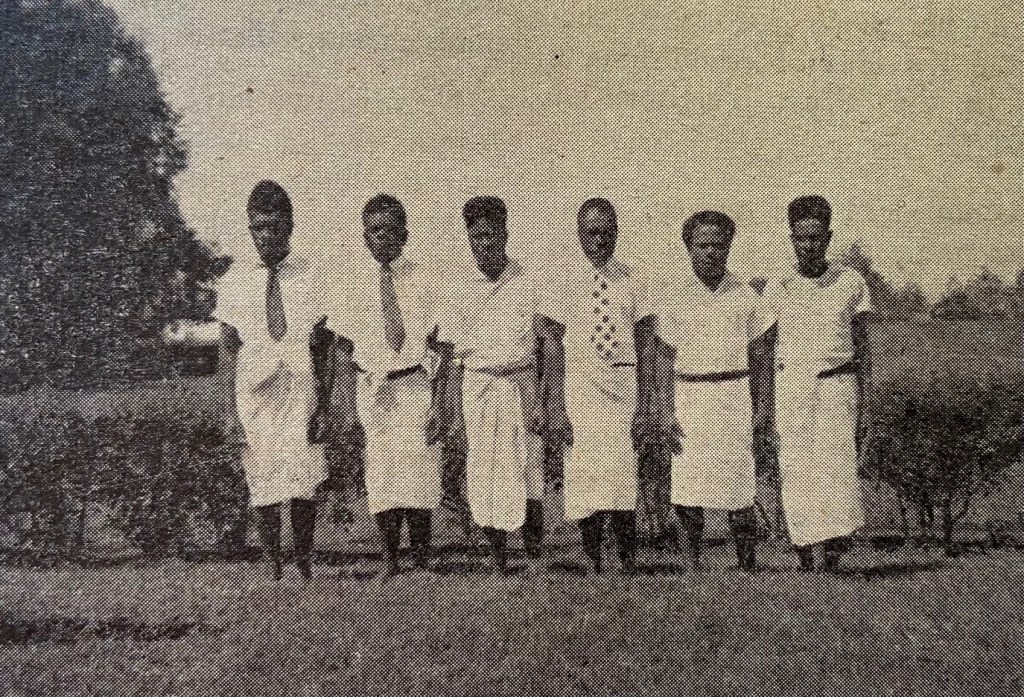
Stephen Moyalaka, Tomas Tomar, Nelson Kainamale, Ernest Clarke, Gordon Young,
 Kaminiel Ladi, David Bulu, Libai Tiengwa

What was the dream for a new mission in the Southern Highlands in 1950?

In Sydney in 1949 and 1950 the Methodist Overseas Missions Board started to discuss some new work. For a long time, they had been very worried about the terrible war that came to the Pacific between 1942 and 1945. The war, and all the fighting and damage to people, property and mission work, affected mission work in New Britain and New Ireland, where the Japanese Navy invaded early in 1942 and captured Methodist Mission staff; almost all the Australian Methodist men died. There was also serious fighting in Papuan Islands Region, Solomon Islands Region and other parts of the whole country. Missionaries from overseas had to leave and the local people had a terrible time until the end of years of war. By 1945 the war was over, but for the next years everyone had to work hard to repair damaged property and gardens and restore the work of the church in those regions.

In 1949 and 1950, the Methodist Board of Mission started to think about new opportunities for outreach. Some people were worried. They thought that there was still a lot of work to do to repair and restore all the places and church communities that had been damaged by the war years. Leaders had died and they all had to start again with their ministry. As well as the needs in New Guinea Islands, Papuan Islands and Solomon Islands, they were also worried about war damage in North Australia and Fiji.

At the same time, the Methodists in Australia heard news about large populations of people in the Highlands. Before the war, a few Australian patrol officers went to explore the mountains. They were surprised to find how many people were already living in the mountains, with their gardens and customs, and speaking many different languages. Other missions, such as the Lutherans, the Baptists and the Catholics were already moving to begin new mission work in the Western and Eastern Highlands as well as Enga. The Board of Methodist Overseas Missions (MOM) was interested, but didn’t know where they could go to start something new.

Early in 1950, the men of the MOM Board decided to send some people to look for a suitable place in the Highlands. They decided:

‘That we should seek on the mainland of New Guinea an area where our church would not interfere with the established work of existing missions or occupy areas at present unevangelized but which are the natural field of expansion of such missions. We should seek any untouched population where Methodism could exercise its evangelical and social ministry for years to come.’

1950 Commission of MOM Board reported in The Methodist 25 November 1950
Rev Ernest Clarke

The team to look for a new place for mission included an older Australian missionary, Rev Ernest Clarke. Ernest Clarke was an experienced missionary who had served for more than twenty years in Papuan Islands District. His partner was a younger man, Rev Gordon Young. Young went to New Britain after the war as a military chaplain and then joined the Methodist staff of New Guinea Islands District, working in Namatanai, New Ireland. They took with them Stephen Moyalaka, Nelson Kainamale and Libai Tiengwa from Papuan Islands and Kaminiel Ladi, Tomas Tomar and David Bulu from Namatanai Circuit in New Ireland.

Left: Rev Ernest Clarke

They went to stay at the Lutheran Mission at Ogelbeng and travelled around to see the work of other missions in the area. At first it was hard to find anywhere. Other missions were already working in many places, and the Methodists did not want to interfere with their work.

One day, when the team was in Mt Hagen, not far from Ogelbeng, they met a group of three young patrol officers. Ron Neville, Des Clancy and Sydney Smith had just arrived in Mt Hagen from a big patrol. These three men had started a new government patrol post at Lake Kutubu in the Southern Highlands in 1949 in a region that still had no links with the outside world or government contact. Lake Kutubu was a good starting point because seaplanes could land on the Lake.

‘We started from Lake Kutubu’, they said, ‘and it was our job to find a suitable place somewhere in the Southern Highlands to start a new Government patrol post. We walked through the Mendi Valley on our way back to Mt Hagen. We are going to recommend it to our boss as a good place to be the centre for a new Southern Highlands District. There are no other missions there at all.’

Clarke and Young were very excited about this and met with the senior man, Assistant District Officer Alan Temperley. When Clarke wrote a long report for the MOM Board about their work to survey a place for a new mission, he wrote:

Before we commenced the survey, communications had indicated that we might find a sphere for Methodism, South of the Hagen Range and across the Papuan Border. Here there are the valleys that lie between the Hagen Range and the Limestone Barrier. Some might call it luck; I don’t believe it was the result of careful planning, it was the guidance of God that our survey party arrived in the Highlands at the time when the Administration was considering the possibility of establishing a district station in this area.
 
Last December [1949], the A.D.O. Mt. Hagen, Mr. Alan Temperley, led a patrol from Hagen to Lake Kutubu and return, as he sought a site for an air-strip and District Office. Mr. Temperley advised from the time we first interviewed him that Methodism could find her sphere of work in the Nembi Valley in the centre of the Papuan Highlands. While we were at Hagen, Mr. Smith brought another patrol from Kutubu to Hagen. On the way he discovered sufficient flat land for an airstrip at the junction of the Mendi and Menken Rivers, 18 miles south-west of the peak of Mount Giluwe and at a height of just over 5,000 feet. The strip has already been levelled and has been passed by the Department of Civil Aviation for use.

Rev Ernest Clarke, The Missionary Review—December, 1950

Temperley told Young, ‘If we set up our government camp on one side of the Mendi and Mangani Rivers and you set up on the other side, we can support each other. We think that there are different clan groups on each side of the Mendi River. The local people might not want to welcome us, so you would need to stay close to us.’

Temperley invited Gordon Young to go with him on his patrol to inspect the Mendi area for himself. Gordon Young was young and fit and very keen to go, but Ernest Clarke was older and had problems with his feet, so he stayed in Mt Hagen. For the first patrol, Steven from Papua and Ladi from New Ireland joined the government group. It was a tough walk and took the men seven days, between 19-25 October, to travel from Mt Hagen, along the north western side of Mt Giluwe and into the Mendi Valley. Temperley inspected progress on the new airstrip and encouraged Gordon Young to bring his new mission to Mendi, too. At that time, there were no other missions working anywhere in the Southern Highlands.

At that time, the whole of the Southern Highlands was called ‘restricted territory’ by the Australian Government because the only patrol post was a small one at Lake Kutubu. Although the Australian government understood that they were responsible for governing the whole country, the people of the Southern Highlands had never been contacted and knew nothing about the rest of the world.

The patrol walked back to Mt Hagen and Gordon Young told Ernest Clarke what he had seen and learned. They were both sure that God had guided them to this new place. Clarke returned to Sydney and made his report to the MOM Board at their November meeting in 1950. At the end of a long, detailed report, he wrote:

Our commission was to find an area with sufficient population where Methodism might exercise her evangelical and social ministry. I believe that in the Papuan Highlands we have found such an area. Here there are at least 100,000 people to whom we shall take the message of Christ and its implications. It is a situation in line with the Methodist tradition on Tonga, Fiji, New Britain and Papua. For Australian Methodism, this is the greatest missionary opportunity of the present century. To us has been given the opportunity to co-operate with the Administration to enter this area in time to lay the foundations for the future Christian experience and well-being of the people. No other Protestant Society is ready to take up the task, and the great missionary pioneers, the London Missionary Society and the Lutherans, welcome our entry into this work. It will cost our Church much sacrifice in service and money, but I believe our people of Australia and of the Islands of the Pacific will accept the challenge and advance with Christ to this, one of the last of the unexplored and unevangelised areas of our Australian Commonwealth.”

Rev Ernest Clarke, The Missionary Review—December, 1950

The MOM Board agreed to support this new work and began to make plans. In the Minutes of their meeting, they recorded:

R E S O L V E D

( a ) That the Board, with a solemn appreciation of the momentous and historic importance of this occasion, records its thankfulness to God for the remarkable way in which difficulties have been overcome in the great task undertaken by the survey party, and believes that there has been Divine guidance in the discovery and selection of this new field of missionary endeavour.

1950 Commission of MOM Board reported in The Methodist 25 November 1950

The Board also recorded their appreciation for the work of the men from New Guinea and Papuan Islands who were part of the pioneer team.

The next time Alan Temperley returned to Mendi, Gordon Young went with him again. They arrived on 21 November 1950. This time Tomas Tomar and David Bulu went with the patrol, but Kaminiel Ladi was sick and joined them later. By the time they arrived, the patrol officers had begun a small patrol post and the short airstrip was ready for a small Auster aircraft to be able to land on it.

Now it was time to begin their new mission work.

Margaret Reeson  2023

Sources:
1950 Commission of MOM Board reported in The Methodist 25 November 1950
The Missionary Review—December, 1950

,